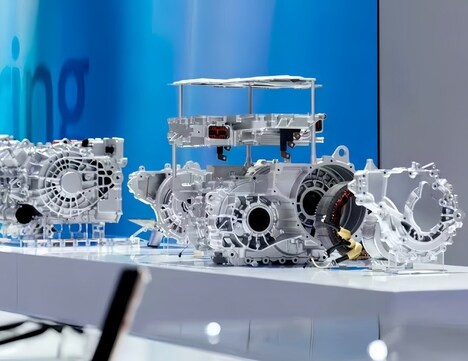
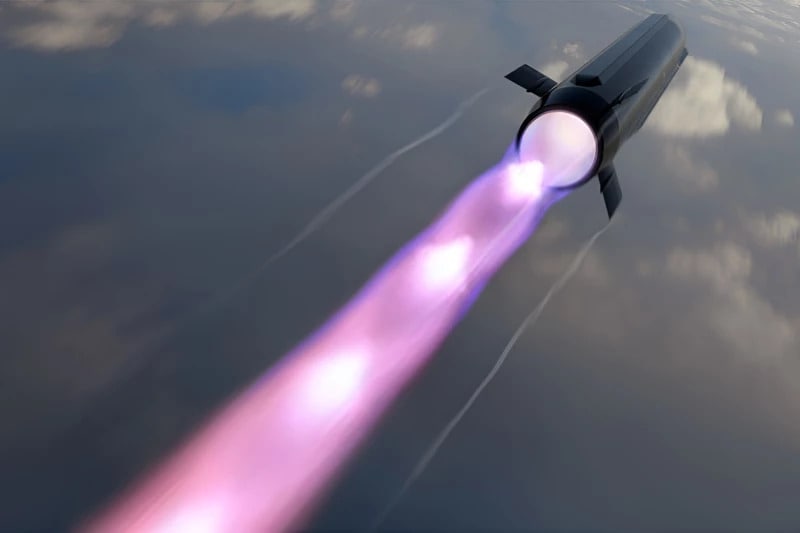
GE Aerospace and Lockheed Martin collaborated on a liquid-fueled rotating-detonation ramjet (RDRJ) designed to improve the efficiency of hypersonic missiles. The demonstrator engine uses a rotating detonation core, featuring a supersonic combustion wave that circulates within an open-ended cylinder to sustain pressure and reduce fuel use. This approach aimed to address the so-called efficiency gap that has limited current hypersonic propulsion.
The RDRJ concept combined a compact rotating-detonation engine with Lockheed Martin’s high-speed tactical inlet for dual-mode ramjet operation. In practice, the system can function as a ramjet at supersonic speeds and transition to a scramjet configuration at hypersonic velocities. Because the rotating-detonation core can operate from subsonic up to hypersonic regimes, it reduces the need for oversized rocket boosters and allows for a lighter overall propulsion package.
For defense stakeholders, this engine architecture matters because it supports extended range and extreme speeds without proportional cost or size increases. The simplified construction and dual-mode flexibility point toward hypersonic systems that can be produced at greater scale while remaining adaptable to different altitudes and mission profiles. This positions rotating-detonation ramjets as a key signal in next-generation missile design, emphasizing efficiency and mass manufacturability over one-off experimental platforms.
Image Credit: GE Aerospace
What Makes This Trend Stand Out
- Dual-mode Propulsion Systems
- Combining ramjet and scramjet functionalities in a single engine creates versatile designs that adapt across multiple speed regimes, offering transformative benefits for aerospace engineering.
- Fuel-efficient Hypersonic Design
- Innovations like rotating-detonation cores push the boundaries of fuel efficiency, enabling longer range and faster hypersonic flight without the traditional burden of increased fuel consumption.
- Compact Propulsion Technology
- The development of smaller, potent engines reduces the necessity for large boosters, paving the way for lighter and more adaptable missile architectures.
Sectors Adopting This
- Aerospace Engineering
- Advancements in propulsion systems within this field signal a shift towards creating more efficient and scalable engines capable of supporting hypersonic travel.
- Defense Technology
- This industry stands ready to benefit from hypersonic systems that promise extended range and efficiency, catering to the demands of modern strategic applications.
- Manufacturing and Production
- Efficient engine designs point to a future where hypersonic systems can be mass-produced, revolutionizing how such cutting-edge technology is manufactured at scale.