The Stanford Aircraft is only beginning to evolve helicopter ability. Helicopters are used in the most dangerous of situations. Many lives have been saved in times of forest fires or water rescue missions because of the ability to reach high risk locations.
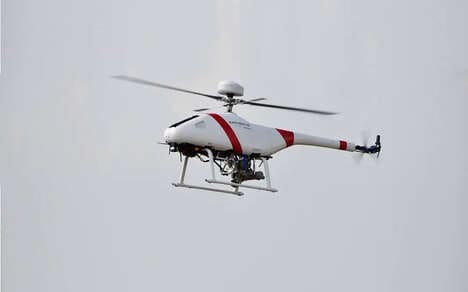
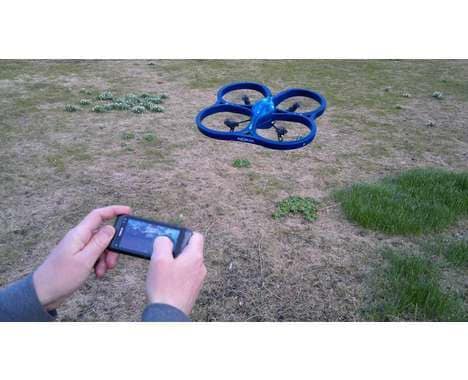
Autonomous helicopters programmed to maneuver without a pilot in the cockpit have become more commonly used tools. One of the primary issues surrounding these helicopters is the difficulty behind programming their movement.
But what if they could teach themselves?
The Stanford Aircraft, developed by Professor Andrew Ng and multiple graduating students at (you guessed it) Stanford University, is a standard remote control helicopter equipped with accelerometers, gyroscopes and magnetometers used to monitor the position, direction, orientation, velocity, acceleration, and spin of the helicopter in several dimensions.
A computer on the ground receives data and via radio at 20 times per second sends new flight directions to the helicopter based on a previous flight pattern flown by a expert.
The Stanford Aircraft's new technology has the potential to emerge in war-torn areas in search of land mines or to track the hotspots of wildfires in California in order to deliver quick and accurate information to fire services.
What Makes This Trend Stand Out
- Autonomous Helicopters
- Disruptive innovation opportunity: Develop self-learning algorithms that enable autonomous helicopters to improve their maneuverability and navigation.
- AI-assisted Flight Control
- Disruptive innovation opportunity: Create advanced AI systems that analyze flight data to generate optimized and safer flight directions for autonomous helicopters.
- Sensor Technology
- Disruptive innovation opportunity: Innovate sensor technology to enhance the accuracy and reliability of monitoring the position, direction, and orientation of autonomous helicopters.
Sectors Adopting This
- Search and Rescue
- Disruptive innovation opportunity: Develop autonomous helicopters with self-learning capabilities to enhance search and rescue missions in dangerous situations like forest fires and water rescues.
- Military and Defense
- Disruptive innovation opportunity: Implement self-teaching algorithms in autonomous helicopters to improve their effectiveness in war-torn areas for tasks such as mine detection and surveillance.
- Firefighting and Emergency Services
- Disruptive innovation opportunity: Utilize self-learning autonomous helicopters equipped with advanced sensors to track and monitor wildfires, providing timely and accurate information to aid firefighting efforts.