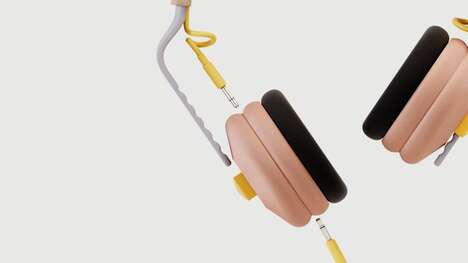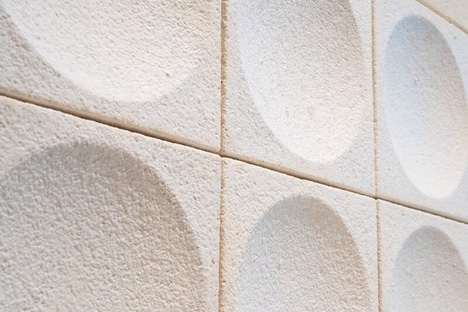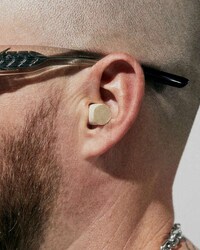

Finnish studio Aivan facilitates one of the more impressive sustainable material explorations and it proves the viability of its findings through a pair of eco-friendly headphones.
Dubbed 'Korvaa,' the product highlights an engaging approach to manufacturing that utilizes a combination of microbially grown substances. Succeeding in the quest for a balanced relationship between biology and engineering, the eco-friendly headphones boast six different biologically derived materials.
To built the over-ear audio device, Aivan utilized trichoderma reesei — a fungus, mycelium from phanerochaete chrysosporium, yeast, spider silk, cellulose, as well as a cellulose-mycelium composite.
The eco-friendly headphones have been built in a tentative collaboration between Aivan, the VTT Technical Research Centre of Finland and Aalto University. The goal was to create a three-dimensional object that boasts the benefits of bioplastic and seeks to "showcase the potential [...] of synthetic biology."
What Makes This Trend Stand Out
- Sustainable Material Exploration
- Disruptive innovation opportunity: Develop new manufacturing processes and products using microbially grown substances to create sustainable materials.
- Biology-engineering Integration
- Disruptive innovation opportunity: Combine biological and engineering principles to design innovative and eco-friendly products.
- Synthetic Biology Showcases
- Disruptive innovation opportunity: Use synthetic biology to create three-dimensional objects with the benefits of bioplastic.
Sectors Adopting This
- Consumer Electronics
- Disruptive innovation opportunity: Incorporate sustainable materials into the manufacturing of headphones and other electronic devices.
- Biotechnology
- Disruptive innovation opportunity: Explore the potential of synthetic biology to develop new materials and products.
- Design and Manufacturing
- Disruptive innovation opportunity: Embrace sustainable design practices and integrate biology and engineering in the manufacturing process.