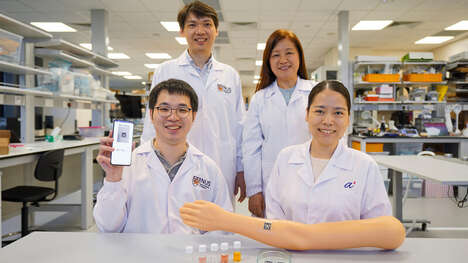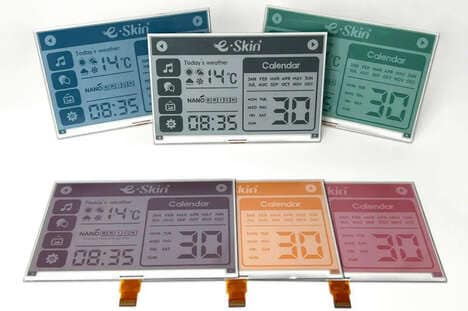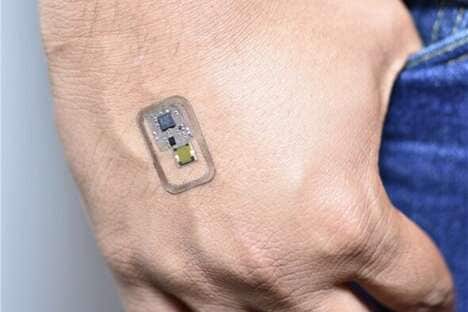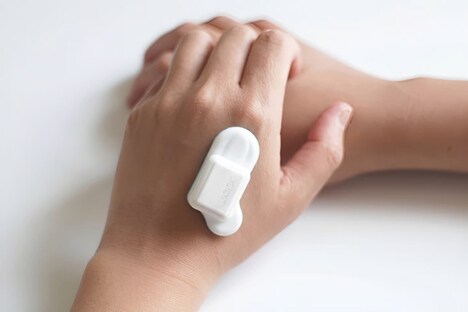

Scientists at Berkeley have been able to successfully manufacture an artificial electronic epidermis called 'E-Skin' that can sense pressure. Striving to make robotic abilities able to touch and feel a variety of objects has been the goal, and the outcome of this superior artificial intelligence is a scientific breakthrough.
The development of the ultra-small nanowires that make up the semi-conductor material of the 'E-Skin' brings about exciting possibilities in the field of robotics. The synthetic pressure detecter that can acknowledge an egg may be used for future home appliances -- robots that can do your dishes? What's more, the 'E-Skin' opens the doors to recovering the sense of touch those who have suffered nerve damage.
What's Driving This Trend
- Artificial Electronic Epidermis
- The development of 'E-Skin' presents disruptive innovation opportunities in robotics, enabling robots to touch and feel a variety of objects.
- Nanowire Semiconductor Material
- The ultra-small nanowires used in 'E-Skin' offer potential disruptive innovation opportunities in various industries, such as healthcare and consumer electronics.
- Recovering Sense of Touch
- 'E-Skin' opens possibilities for disruptive innovation in healthcare, providing solutions for individuals who have suffered nerve damage.
Who This Affects Most
- Robotics
- The development of 'E-Skin' can revolutionize the robotics industry by enabling robots to have a sense of touch and interact with objects.
- Healthcare
- The use of nanowire semiconductor material in 'E-Skin' can disrupt the healthcare industry by providing advanced sensing capabilities for medical devices and prosthetics.
- Consumer Electronics
- 'E-Skin' has the potential to disrupt the consumer electronics industry by introducing touch-sensitive interfaces in smart devices and appliances.