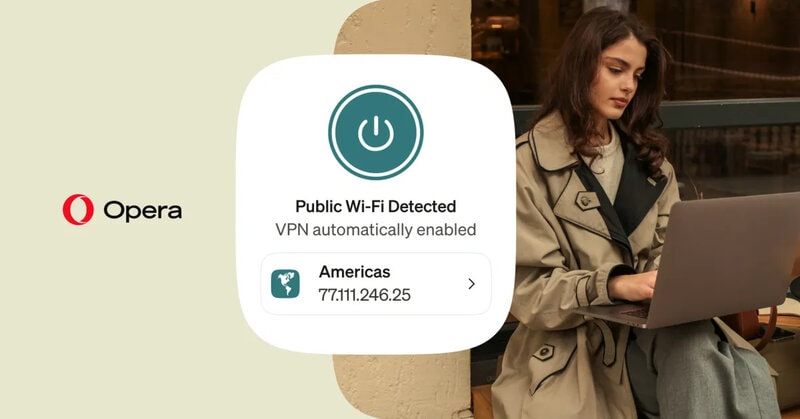
Opera is expanding desktop privacy with a built-in VPN that can turn on automatically when users connect to public or unsecured Wi-Fi. The feature keeps protection in the browser instead of asking people to hunt through settings each time they switch between networks.
The rollout covers users in the US and France, and the option remains opt-in. Opera also says the VPN complies with GDPR rules and has been independently audited by Deloitte, which lends the feature more credibility to people wary of browser-based privacy tools. That mix makes the browser feel less like a passive window to the web and more like a guardrail that reacts when the connection becomes risky.
For consumers, this means one fewer step between opening a laptop and getting protection on shaky networks. It turns a manual privacy habit into something closer to a default behavior, which may make browser VPNs easier to use day to day.
Image Credit: Opera
What Makes This Trend Stand Out
- Context-aware Privacy
- Browser protections that activate based on network risk create opportunities for software experiences that adapt security settings without adding user friction.
- Embedded VPN Tools
- Built-in VPN features point to a shift where privacy utilities become native parts of everyday platforms rather than separate paid applications.
- Trust-verified Security
- Independent audits and regulatory alignment can differentiate privacy products by making credibility a visible part of the user experience.
Sectors Adopting This
- Web Browsers
- Competitive advantage may increasingly come from browsers that function as proactive security layers instead of simple access points to the internet.
- Cybersecurity
- Consumer security providers face openings in lightweight, automated protections designed for casual users on unpredictable public networks.
- Telecommunications
- Public Wi-Fi operators and connectivity providers can benefit from privacy-aware network ecosystems that reduce user concern around unsecured access.