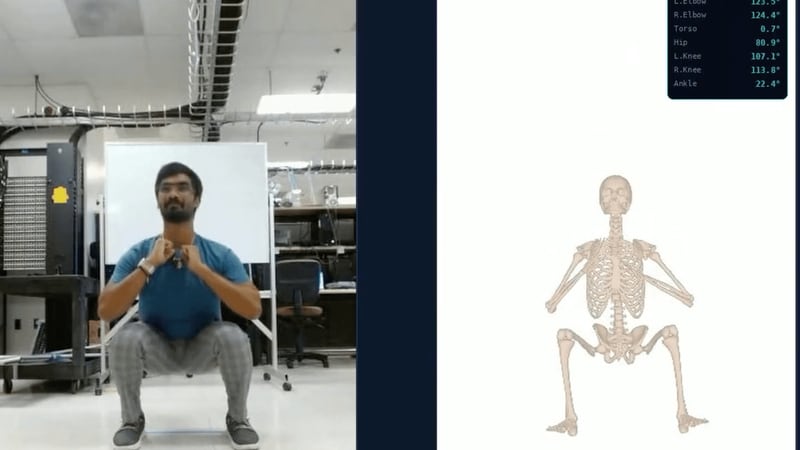
AI biomechanical coaching is redefining digital fitness by bringing personalized movement analysis to users exercising without direct access to trainers. Developed by researchers at Drexel University and Michigan State University, BioCoach combines computer vision, biomechanical modeling, and AI language capabilities to evaluate exercise form in real time and provide detailed corrective guidance. Unlike many fitness applications that offer generic encouragement, the system analyzes joint angles, body positioning, and movement patterns to deliver exercise-specific feedback and explain why adjustments matter.
The broader impact extends beyond fitness coaching. Real-time movement analysis could support physical therapy, rehabilitation, injury prevention, and remote wellness programs. For technology providers, this creates opportunities to develop more advanced coaching platforms that offer expert-level guidance at scale. As demand for personalized health solutions grows, systems that translate complex biomechanical data into understandable recommendations may become an increasingly valuable component of digital health and fitness ecosystems.
Image Credit: Drexel University and Michigan State University
What's Driving This Trend
- Real-time Form Analytics
- Computer vision systems that assess joint angles and movement quality during workouts create new value in scalable, expert-level exercise correction.
- AI-powered Rehabilitation
- Personalized biomechanical feedback expands remote recovery models by translating clinical movement insights into accessible guidance for patients outside care facilities.
- Conversational Fitness Coaching
- Language-enabled coaching interfaces make complex body mechanics easier to understand, positioning digital fitness tools as more adaptive alternatives to generic workout apps.
Who This Affects Most
- Digital Fitness
- Connected workout platforms gain differentiation through motion-aware coaching that delivers individualized technique feedback without requiring live trainer supervision.
- Physical Therapy
- Remote therapy services benefit from automated movement assessment that supports progress tracking, injury prevention, and more consistent corrective recommendations.
- Health Technology
- AI-driven biomechanical modeling strengthens digital health ecosystems by turning sensor and video data into practical wellness intelligence at scale.