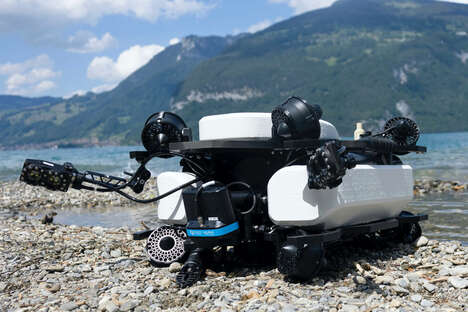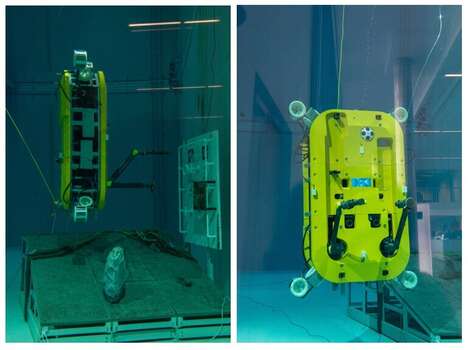
British scientists will release a school of five robot fish next year off the northern Spanish port of Gijon. Shaped like carp, the robotic fish will be used to search for potential pollutants in the sea.
The robot fish, which cost about $29,000 a piece, will be operated with Wi-Fi technology and use chemical sensors to find biohazards in the water.
One major difference in these robot fish versus earlier models is they aren’t operated by remote control, but are able to run autonomously without human guidance. They have batteries which last five to eight hours.
If the robot fish are a success, plans are in place to embed the fish in seas, lakes and rivers across the world.
What's Driving This Trend
- Autonomous Robotic Fish
- The development of autonomous robotic fish equipped with sensors for detecting biohazards in the water creates disruptive innovation opportunities in marine research and pollution monitoring.
- Wireless Chemical Sensors
- The use of wireless chemical sensors in robotic fish not only enhances water pollution detection capabilities but also opens up opportunities for wider use in environmental monitoring.
- Embeddable Robot Fish
- The possible embedding of robot fish in water bodies globally can lead to disruptive innovations in real-time monitoring of water quality and pollution levels.
Who This Affects Most
- Environmental Monitoring
- The development of autonomous robotic fish and wireless chemical sensors can disrupt the environmental monitoring industry by providing more efficient and effective ways to detect and monitor pollution in water bodies.
- Marine Research
- The use of autonomous robotic fish in marine research can lead to disruptive innovations in areas such as oceanography and marine biology as they can collect data autonomously and can access areas difficult for human researchers to reach.
- Aquaculture
- The use of autonomous robotic fish equipped with wireless chemical sensors can disrupt the aquaculture industry by providing real-time monitoring capabilities for water quality and early detection of fish disease outbreaks.