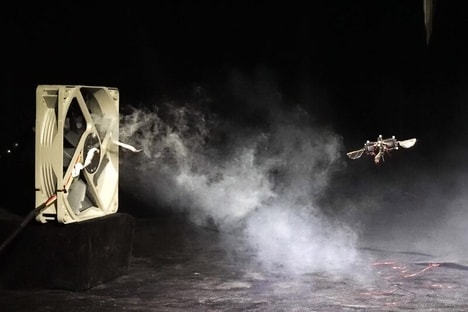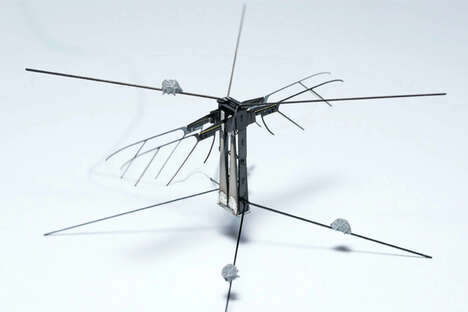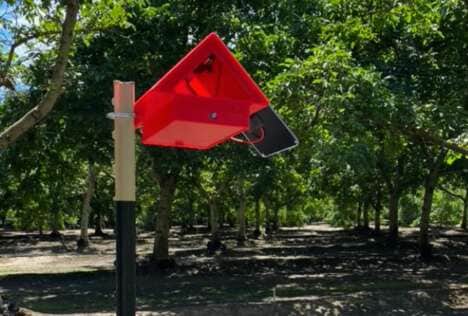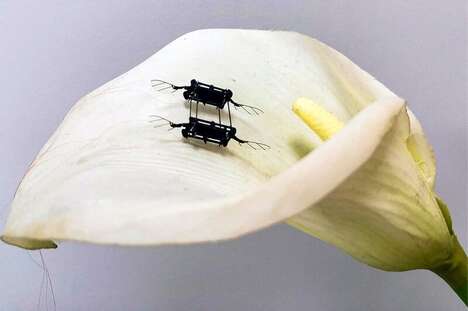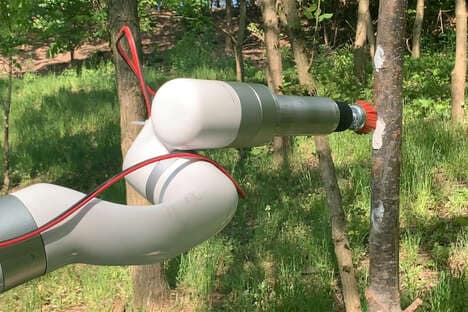
This bio-inspired TNT sensor is modeled after the silk month, who uses its antennae to attract potential mates.
Mother Earth and evolution are a design pair made in heaven. Though humans are a pretty creative species, we have much to learn from our surroundings. The way the sensor works is through a pair of constantly vibrating rods (similar to a moth's antennae). Since TNT gives off a distance chemical trace, when the particle lands on the vibrating pieces, a change is felt and a signal is sent, warning us of the slightest amount of TNT in the vicinity.
This sensor technology is an example of how copying the technicalities of nature can benefit us -- perhaps we can do better to take care of it in return.
What Makes This Trend Stand Out
- Bio-inspired Sensors
- Developing sensors modeled after natural organisms, such as the silk moth, to improve detection capabilities.
- Vibrating Sensor Technology
- Exploring the use of vibrating rods to detect subtle chemical traces, like TNT particles, for enhanced sensitivity.
- Nature-inspired Innovation
- Harnessing the design principles found in nature to create innovative solutions for various industries, including security and environmental monitoring.
Sectors Adopting This
- Security
- Opportunity to apply bio-inspired sensors to improve explosive detection systems, enhancing security measures.
- Environmental Monitoring
- Utilizing vibrating sensor technology to detect and track harmful substances in the environment for better pollution management.
- Scientific Research
- Exploring nature-inspired innovation to advance scientific research and discover new possibilities in various fields.