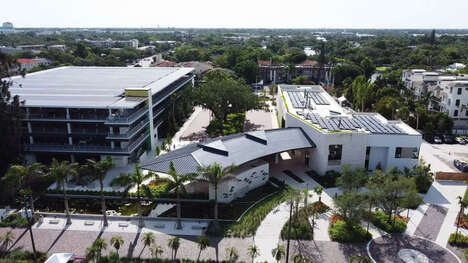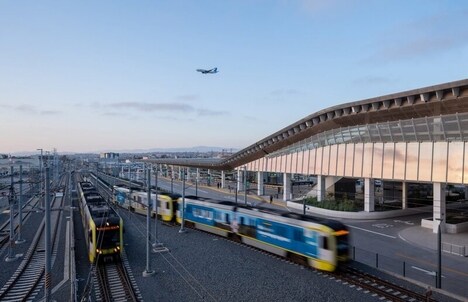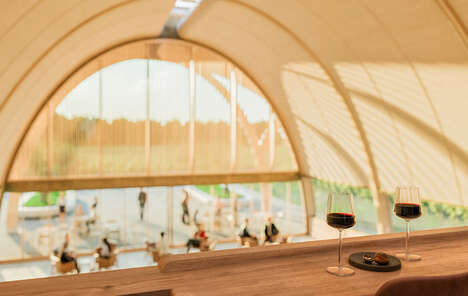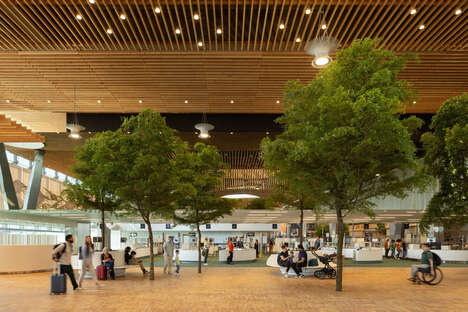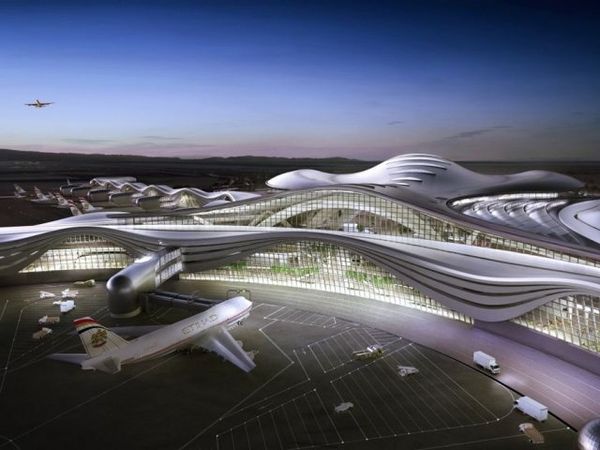
This morning, Shangri-La Construction unveiled its latest green project, Hangar 25 of the Bob Hope Airport in Burbank, California. It’s the first aviation hangar to receive LEED certification and boasts a bevy of environmentally-friendly features.
The 50,630-square-foot Hangar 25 produces 110% of its energy needs with the photovoltaic solar panels on its roof. That’s 400,000 kWh per year of clean energy. Hangar 25 was built using primarily recycled, locally-sourced materials, and its landscaping uses 51% less water than most buildings.
What Makes This Trend Stand Out
- Photovoltaic Solar Panels
- There is a growing trend of incorporating photovoltaic solar panels in construction projects, providing a sustainable and efficient source of clean energy.
- LEED Certification
- LEED certification is becoming increasingly important in the aviation industry, driving the adoption of environmentally-friendly features in hangar construction.
- Sustainable Materials
- The use of recycled and locally-sourced materials is a trend that is gaining traction in the construction industry, reducing waste and promoting sustainability.
Sectors Adopting This
- Construction
- The construction industry has the opportunity to incorporate photovoltaic solar panels and sustainable materials into their projects, promoting energy efficiency and environmental consciousness.
- Aviation
- The aviation industry can benefit from the adoption of LEED certification and environmentally-friendly features in hangar construction, reducing their carbon footprint and contributing to a greener future.
- Renewable Energy
- The renewable energy industry can continue to innovate and expand with the growing demand for photovoltaic solar panels, providing clean and sustainable energy solutions for various applications.