



Toast Integrates POS, AI Ordering and Menu Systems into One Solution
Edited by Mursal Rahman — April 21, 2026 — Business
This article was written with the assistance of AI.
References: businesswire & qsrmagazine
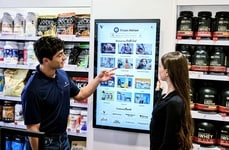
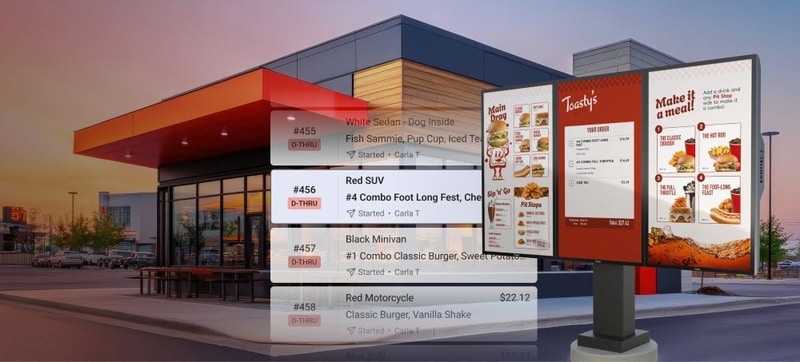
The emergence of unified drive-thru platforms reflects a shift toward more integrated and efficient quick-service restaurant operations. Toast’s Drive-Thru solution brings together point-of-sale systems, digital menu boards, kitchen display systems and AI voice ordering into a single ecosystem. By eliminating fragmented tools and streamlining communication between front-of-house and kitchen teams, the platform enables faster service and improved order accuracy in high-volume environments.
This development has important implications for the QSR industry. Operators can reduce operational complexity while improving speed of service, a critical factor in customer satisfaction and revenue generation. The integration of AI voice ordering also helps address ongoing labor challenges by automating repetitive tasks. Additionally, a unified system allows brands to scale more efficiently across multiple locations while maintaining consistency. As competition intensifies, restaurants adopting connected, end-to-end platforms may gain a significant advantage in delivering faster and more reliable drive-thru experiences.
Image Credit: Toast Inc.
This development has important implications for the QSR industry. Operators can reduce operational complexity while improving speed of service, a critical factor in customer satisfaction and revenue generation. The integration of AI voice ordering also helps address ongoing labor challenges by automating repetitive tasks. Additionally, a unified system allows brands to scale more efficiently across multiple locations while maintaining consistency. As competition intensifies, restaurants adopting connected, end-to-end platforms may gain a significant advantage in delivering faster and more reliable drive-thru experiences.
Image Credit: Toast Inc.
Drive-thru tech adoption: integrated systems and AI ordering
Informs near-term decisions by QSR operators on upgrading drive-thru tech, prioritizing features, and testing AI voice ordering.
1 / 3
When did you last upgrade any drive-thru ordering or menu tech?
2 / 3
How likely are you to trial AI voice ordering?
3 / 3
Which would you be more likely to adopt next for the drive-thru?
Trend Themes
-
Unified Drive-thru Ecosystems — Consolidated systems that merge POS, digital menus, kitchen displays and AI ordering create opportunities to upend legacy multi-vendor stacks with single-vendor, tightly integrated solutions.
-
AI Voice Ordering and Automation — Natural-language ordering and automated order capture reduce reliance on frontline staff and enable models that reconfigure labor needs around supervision and exception handling.
-
Data-driven Operational Consistency — Real-time telemetry across locations supports predictive throughput management and standardized customer experiences that can displace manual, site-by-site optimization methods.
Industry Implications
-
Quick-service Restaurants — High-volume restaurant chains stand to be transformed by platforms that accelerate service and tighten fulfillment accuracy, altering cost structures and customer throughput dynamics.
-
Restaurant Technology Providers — Vendors of POS, kitchen displays and menu software face pressure to converge feature sets and APIs into unified offerings that could redefine competitive positioning and partnerships.
-
Franchise Operations and Management — Multi-location operators can leverage centralized control of menus, pricing and workflows to scale consistency and brand standards in ways that challenge decentralized franchise models.
9.2
Score
Popularity
Activity
Freshness