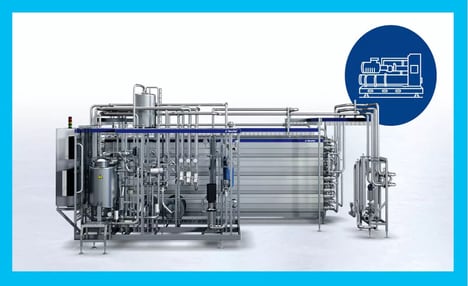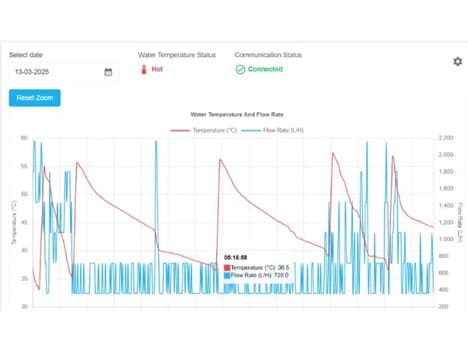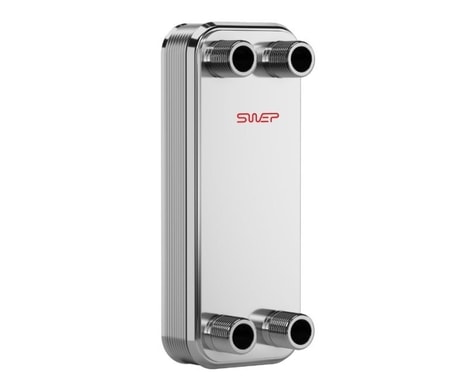
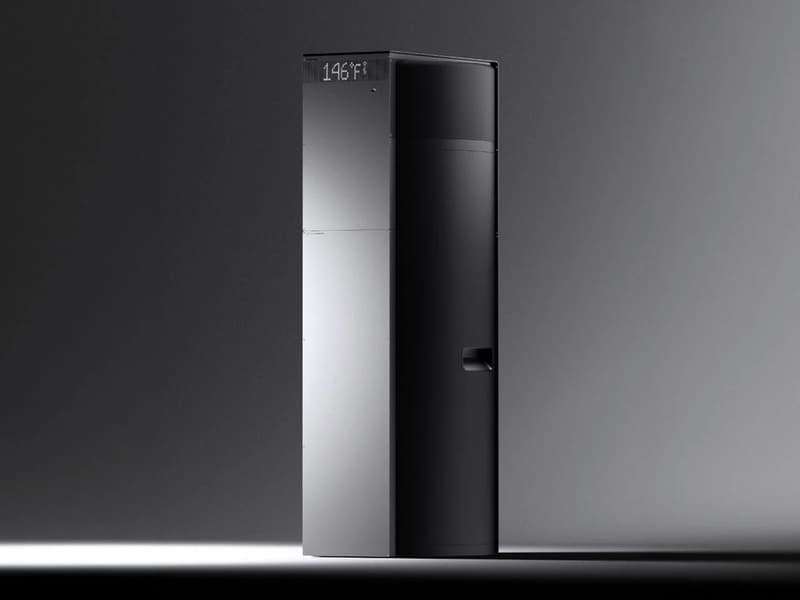
The 'Superheat H1,' is a domestic water heater that replaces conventional heating elements with computer processors, featuring hardware that performs computation while its waste heat warms household water. Designed by Zhenyang Yan, Andrew Geng and the Superheat team, the unit was developed and tested over a year and moved toward certification after showing meaningful performance gains.
The H1 packs processors into a modular aluminum enclosure designed for serviceability, with swappable internals so compute components can be upgraded over time and patents protecting the layout. Testing reported up to 80% reductions in hot-water energy use by redirecting compute-generated heat, and the system installs like a standard heater to avoid changing user routines.
For consumers, the H1 turns a fixed household cost into an active resource, lowering bills while integrating domestic space into distributed computing trends. It signals a shift toward appliances that double as infrastructure, offering a practical route to pairing rising compute demand with everyday energy needs.
Image Credit: Yanko Design
Why This Trend Is Growing
- Compute-to-heat Convergence
- By channeling processor waste heat into domestic systems, computing workloads become a distributed thermal resource that can materially lower household energy consumption.
- Modular Serviceable Appliances
- This design emphasizes swappable internals and upgradeable compute modules, extending product lifecycles and decoupling functional obsolescence from physical hardware.
- Appliance-as-infrastructure
- Consumers' everyday devices are evolving into nodes of broader infrastructure, enabling homes to participate directly in distributed computing and energy management networks.
Industries Being Reshaped
- Residential Energy Management
- Integrating compute-generated heat into household systems presents opportunities to redefine demand profiles and reduce reliance on traditional heating fuels.
- Edge Data Center Hardware
- Manufacturers of compact server modules and enclosures may be disrupted by thermal-first designs that prioritize waste-heat reuse over raw compute density.
- Home Appliance Manufacturing
- Household appliance makers face a shift toward hybrid products that combine consumer-facing functionality with backend compute and servicing ecosystems.