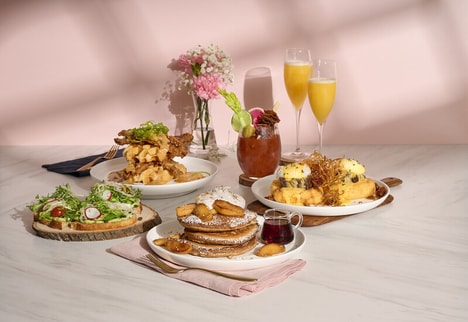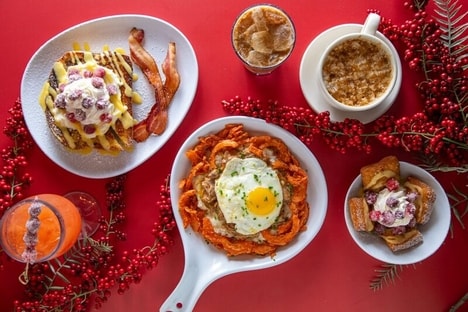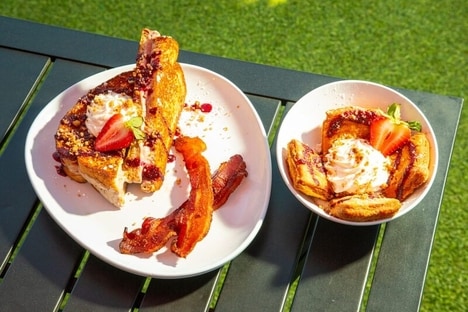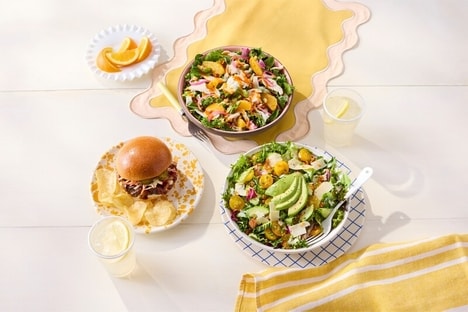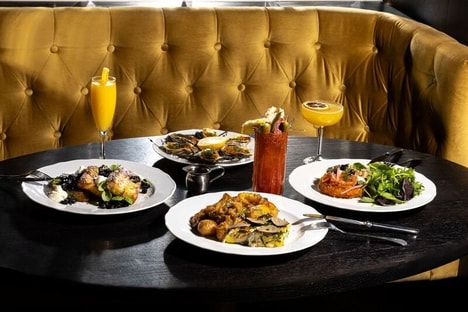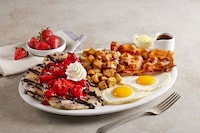
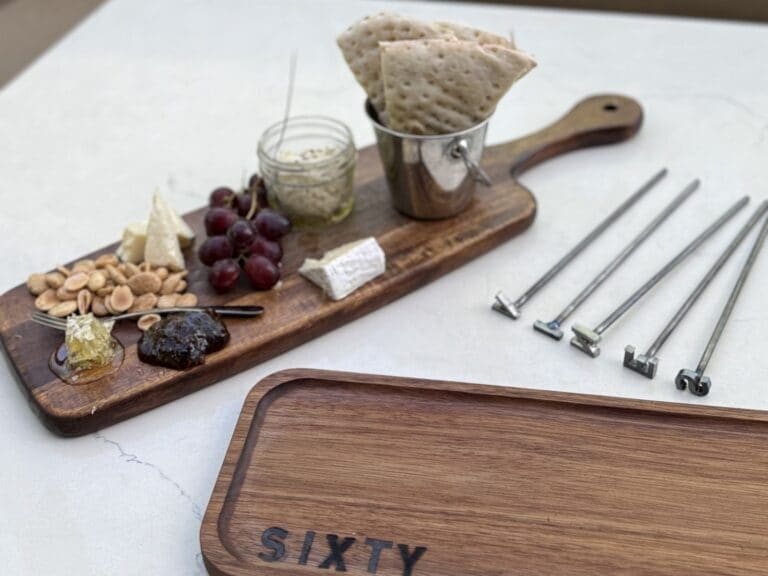
Sixty Vines introduced a refreshed brunch menu to mark its 10th anniversary, featuring a wine-country dining approach and its signature wine-on-tap program, with new items designed for sharing and discovery.
The lineup included the Avocado Bene Croast, Carrot Cake Pancakes, Pistachio & Spiced Cherry French Toast and a Brunch Board, alongside staples like the Winemaker’s Breakfast and Egg White Frittata. For Earth Month, the brand paired food offerings with sustainability activations, such as an Earth Month Cheese Board and a curated Earth Month Flight in partnership with the Arbor Day Foundation that plants a tree per flight sold.
Sixty Vines emphasized its wine-on-tap system — each keg equals 26 bottles and is reusable roughly 1,500 times — highlighting how the anniversary rollout links elevated casual brunch to measurable waste reduction.
Image Credit: Sixty Vines
Key Themes Behind This Trend
- Wine-on-tap Sustainability
- The conversion of bottle-based wine to reusable keg systems creates potential for radically lower packaging waste and new supply-chain models tied to refillable assets.
- Shareable Elevated Brunch
- A shift toward communal, premium brunch boards and dessert-forward dishes signals openings for menu-as-social-experience concepts that blend upscale ingredients with casual service.
- Cause-linked Menu Promotions
- Pairing limited-time menu items with measurable environmental outcomes introduces possibilities for commerce models where purchases directly fund verified sustainability actions.
Where This Applies
- Casual Dining
- Modern casual restaurants stand to redefine unit economics by adopting communal menu formats and beverage systems that reduce per-cover costs while boosting guest engagement.
- Wine and Beverage Technology
- Companies supplying keg-based dispensing, monitoring, and reuse logistics could disrupt conventional bottling through integrated hardware-software offerings that track usage and environmental impact.
- Sustainable Food Partnerships
- Nonprofits and brands collaborating on purchase-linked conservation programs create a marketplace for verified impact products that enhance brand differentiation and customer loyalty.