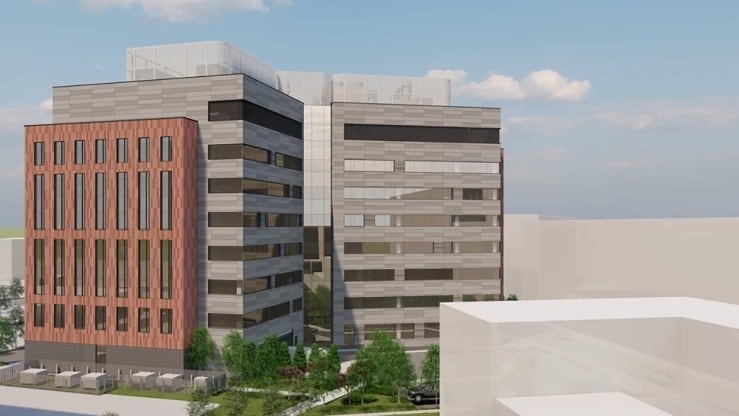
Ocean State Labs launched as Rhode Island’s first life sciences startup incubator, backed by Brown University and a coalition of public and private partners, featuring laboratory space, operational support and commercialization resources for early-stage biotech companies. The facility occupies 30,000 square feet at 150 Richmond Street in Providence and is operated by Portal Innovations in partnership with the Rhode Island Life Sciences Hub and state development groups.
The incubator is designed to help startups scale scientific discoveries into commercial businesses through access to lab infrastructure, venture development support, technical expertise and investor networks. Initial tenants include companies founded by Brown researchers working in oncology, regenerative medicine and neuroscience, including extracellular matrix therapy startup XM Therapeutics.
For founders and the regional economy, Ocean State Labs aims to reduce infrastructure barriers that often push biotech startups to relocate, strengthening Rhode Island’s growing life sciences ecosystem and supporting long-term local innovation growth.
Image Credit: HOK and Legal & General
What's Driving This Trend
- University-backed Incubators
- Concentrating academic resources and credibility around early-stage ventures creates a pathway for university research to be spun into commercially viable biotech companies within a supportive ecosystem.
- Distributed Lab Infrastructure
- The emergence of shared, fully equipped laboratory spaces reduces capital barriers for scientific teams and enables nimble project scaling without large upfront facility investments.
- Regional Retention of Startups
- Localized incubators that provide funding networks and operational support can shift founder decisions toward staying in-state, altering traditional migration patterns to major biotech hubs.
Who This Affects Most
- Biotech Startups
- Early-stage life sciences firms stand to benefit from bundled access to lab space and commercialization services that can compress timelines from discovery to market-readiness.
- Life Sciences Real Estate
- Lab-focused property development is evolving into a service-led model where facilities are offered with technical support and community programming, changing value propositions for tenants.
- Venture Development Services
- Networks offering investor introductions, regulatory guidance and operational mentorship are positioned to transform capital deployment and de-risk translational science investments.