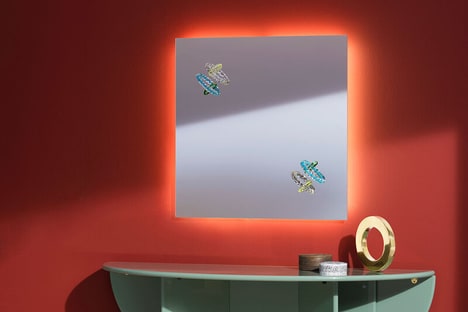
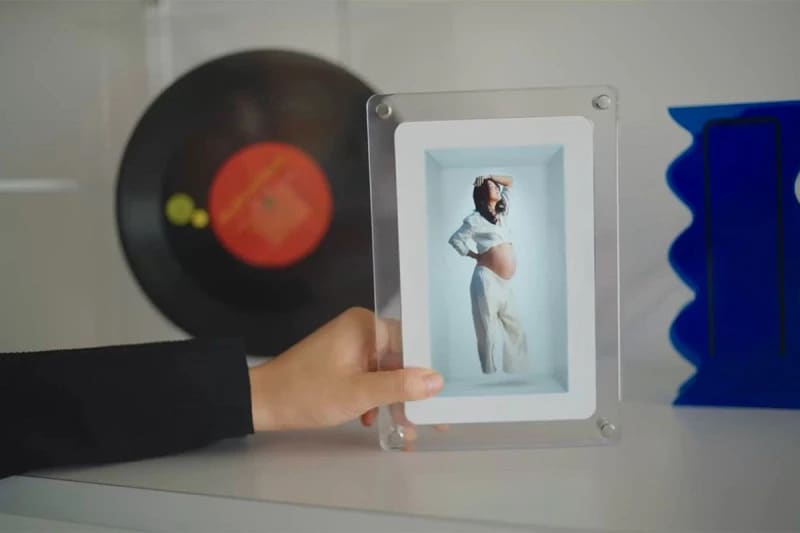
Looking Glass introduced the Musubi, a compact consumer holographic photo and video frame designed to present existing images and short clips as floating 3D holograms, featuring the company’s Hololuminescent Display (HLD) embedded behind a 7-inch TFT-LCD. Users load photos and videos into a companion desktop app where content is converted into holographic moments, then transfer files via USB-C to the acrylic-framed display.
The Musubi plays videos with selectable 3D freeze-frame moments, offers a speaker for audio, supports portrait mode only and includes 8 GB of storage for about 1,000 holograms. Looking Glass is crowdfunding the Musubi on Kickstarter with early-bird pricing; units were slated to ship in June 2026 if funded. Consumers gain a simple way to relive memories in depth, bringing 3D display tech from commercial demos into home decor and gifting contexts.
Image Credit: Looking Glass
What's Driving This Trend
- Home Holographic Displays
- Compact consumer-grade holographic frames bring volumetric imagery into everyday living spaces, transforming flat photos and clips into perceived 3D scenes.
- Personalized 3D Memory Curation
- Users converting personal photos and short videos into selectable holographic moments creates new demand for curated, timeline-based 3D memory collections.
- Integrated Hld-and-lcd Hybrids
- Embedding Hololuminescent Display layers behind conventional TFT-LCD panels enables lower-cost, manufacturable holographic products suitable for mass-market adoption.
Who This Affects Most
- Consumer Electronics
- Small-format holographic frames represent a new device category that blends display, storage, and simple content workflows in a single consumer product.
- Home Decor and Gifting
- Decor and gift markets are being redefined by display objects that present memories as floating, tactile-feeling holograms rather than traditional prints.
- Photography and Memory Services
- Photo labs, app developers, and memory-archiving services could be disrupted by demand for conversion tools and storage-optimized formats for holographic content.