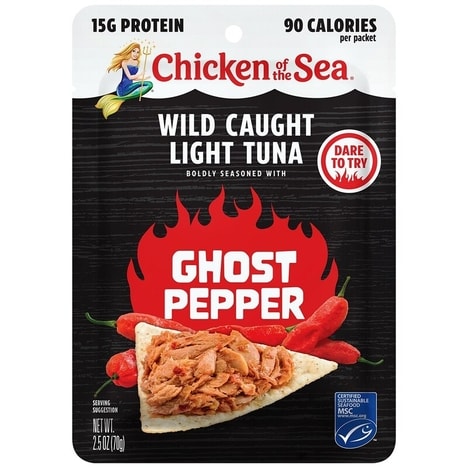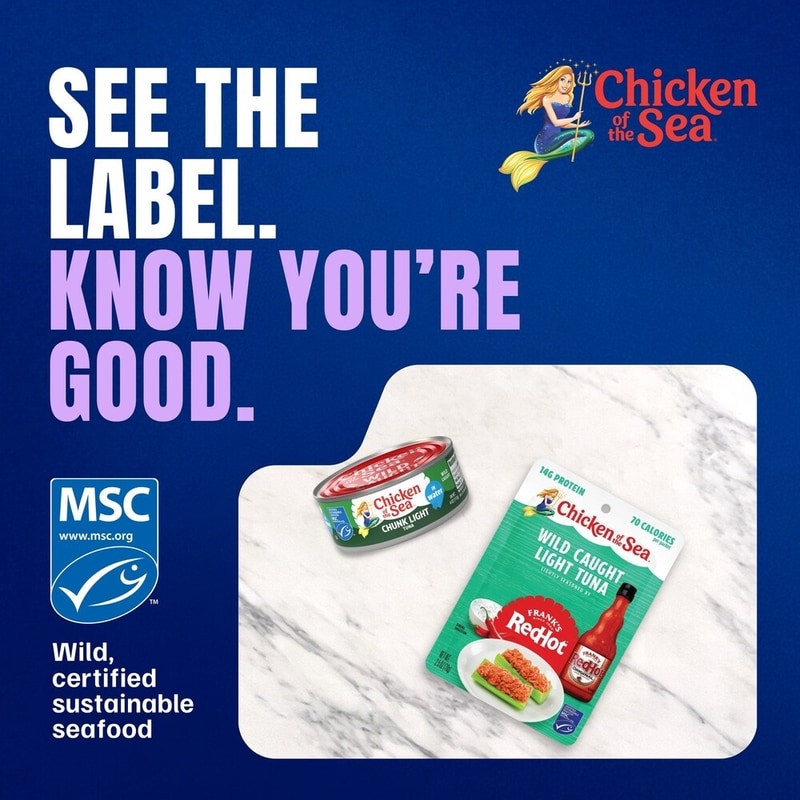
Chicken of the Sea has announced that by the end of 2026, all of its branded retail tuna products will achieve Marine Stewardship Council Certification. This announcement makes the brand the major mainstream seafood company in the United States to carry the MSC blue fish ecolabel across its entire retail portfolio of cans and pouches.
The Marine Stewardship Council Certification verifies that the tuna originates from fisheries with healthy fish populations, environmentally sustainable practices, minimized ecosystem impacts, and effective management systems. Chicken of the Sea's parent company — Thai Union — has spent over a decade investing in fishery improvement projects across roughly ten percent of global tuna catches before reaching this point. To receive the MSC label, companies are required to be compliant with rigorous standards.
Image Credit: Chicken of the Sea
What Makes This Trend Stand Out
- Mainstream Ecolabel Adoption
- The shift of a major brand to full-portfolio MSC certification signals market-wide credentialing that can redefine consumer trust metrics and premiumization strategies.
- Supply Chain Traceability
- Growing demand for verified origin information is creating scope for integrated traceability systems that consolidate catch data, certification status, and retailer transparency claims.
- Sustainable Sourcing Scale-up
- Expansion of certified sourcing across large-volume suppliers points to scalable models for ecosystem-friendly procurement that alter commodity supply dynamics and cost structures.
Sectors Adopting This
- Canned Seafood Retail
- Mass adoption of ecolabels within retail tuna can shift shelf competition toward certified provenance, enabling new product segmentation based on sustainability credentials.
- Food Packaging and Labeling
- Label-first selling propositions are likely to accelerate demand for smart packaging solutions that embed verification markers and consumer-facing assurance features.
- Fishing Fleet Management
- Certification pressures are driving modernization opportunities in fleet monitoring and best-practice adoption, altering operational investment priorities for fleets and managers.