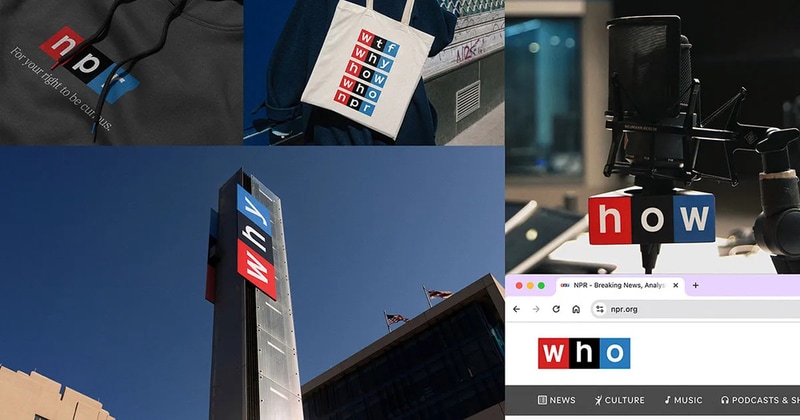
NPR launched a national campaign that temporarily reworked its iconic logo into question words, created by Mischief @ No Fixed Address and rolled out across its Washington, D.C. headquarters, billboards and digital channels.
The effort, titled “For Your Right to be Curious,” featured questions sourced from listeners—phrases like “How does AI affect my electricity bill?”—and appeared alongside a full-page manifesto in The New York Times. The visual swap is the first logo alteration in NPR’s 56-year history and was positioned as a defense of public curiosity after recent funding and political pressures.
The campaign paired bold typography with everyday queries to link the brand to civic inquiry and trusted context. For audiences, the activation reframed a static mark as an invitation to ask and listen, reinforcing NPR’s role in public media and the broader trend of brands using identity changes to spark conversation.
Image Credit: NPR
Why This Trend Is Growing
- Question-driven Branding
- A shift toward logos that morph into question-led prompts, enabling identity to function as an interactive gateway for audience curiosity and contextual engagement.
- Participatory Identity Design
- The integration of user-sourced content into core brand marks highlights an opportunity for collaborative identities that reflect community input and boost perceived authenticity.
- Contextual Trust Signaling
- Reframing visual identity around inquiry and trusted context indicates potential for brand marks to convey credibility signals tailored to topical or political climates.
Industries Being Reshaped
- Public Media
- NPR’s campaign underscores possibilities for news organizations to use mutable identities as platforms for civic engagement and to defend editorial trust in polarized environments.
- Outdoor Advertising
- Billboard and transit placements that adapt branding into question prompts point to innovations in location-aware creative that increase relevance and dwell-time.
- Brand Strategy Agencies
- Agencies are positioned to develop modular identity systems that incorporate audience-generated language and topical framing as a disruptive service offering.