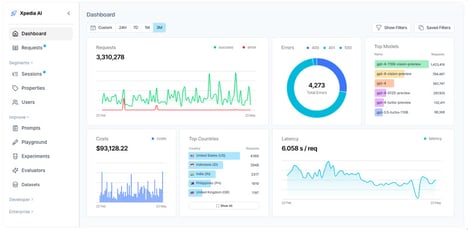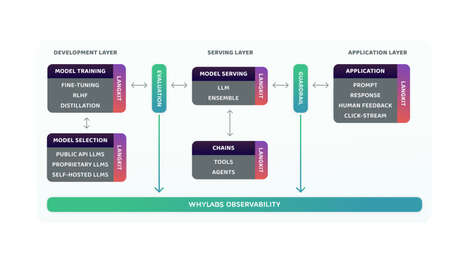
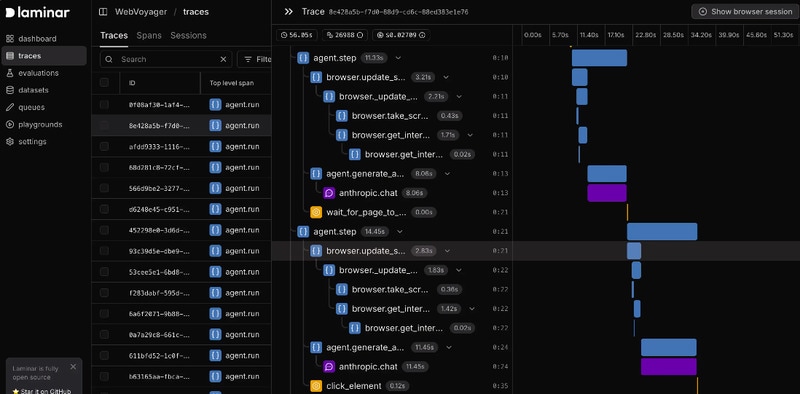
Laminar is an open-source platform built to support the engineering and optimization of AI applications, particularly those involving large language models (LLMs). It enables teams to trace application behavior, run structured evaluations, label production data, and iteratively improve prompt performance.
Written in Rust and leveraging a modern tech stack, Laminar is designed for speed and developer experience (DX). Its all-in-one approach consolidates several core workflows into a single environment, potentially reducing context switching and tooling fragmentation. This makes it relevant for machine learning engineers and product teams building, testing, and refining LLM-based features in production environments. As AI systems move from experimentation to deployment, platforms like Laminar offer infrastructure to support performance monitoring, data labeling, and evaluation loops—key components for responsible, effective, and scalable AI development.
Image Credit: Laminar
Key Themes Behind This Trend
- Open-source AI Platforms
- The emergence of open-source AI platforms like Laminar is enabling more collaborative and transparent development environments, fostering innovation in AI optimization and engineering.
- Enhanced Developer Experience
- A focus on improving developer experience through integrated toolkits is streamlining the workflow for AI engineers, potentially accelerating the deployment of sophisticated machine learning applications.
- AI Evaluation and Monitoring Techniques
- New techniques for monitoring and evaluating AI application performance are crucial in ensuring scalable and efficient deployment of large language models, supporting continual improvement and reliability.
- Trends
- The rise of platforms like Laminar highlights the need for comprehensive AI engineering tools that advance the speed, transparency, and efficiency of deploying large language models.
Where This Applies
- Machine Learning Engineering
- The machine learning engineering industry is increasingly adopting sophisticated toolkits for the seamless integration and optimization of AI applications, reflecting a shift towards more infrastructure-focused development.
- Open-source Software Development
- In the open-source software development sector, platforms designed with modern tech stacks are transforming how engineers collaborate on AI projects, promoting agile methodologies and iteration.
- Tech Stack Innovation
- Tech stack innovations are critically shaping the AI development landscape, offering new opportunities to enhance application performance and developer productivity through innovative solutions like those provided by Laminar.