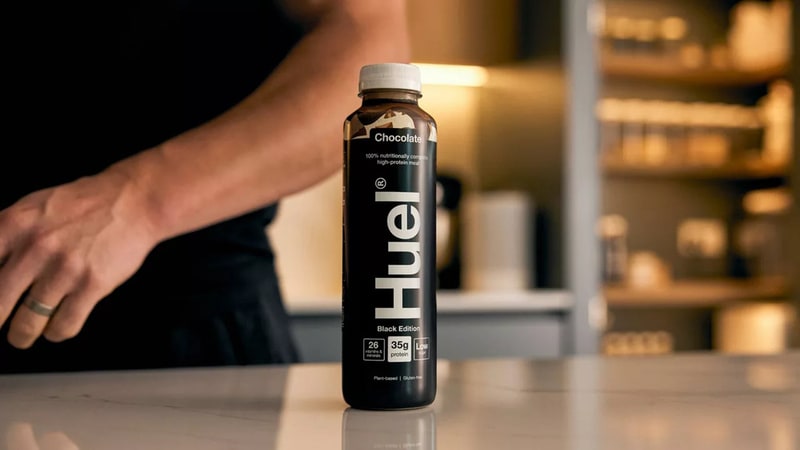
Danone acquired Huel, the UK-based meal replacement brand, in a €1.2 billion deal that positioned the multinational deeper into functional nutrition, featuring Huel’s global omnichannel brand and in-house production capacity. The purchase followed Huel’s recent factory expansion in Milton Keynes and strong FY2025 revenue growth, giving Danone an established direct-to-consumer and retail footprint.
The acquisition complements Danone’s 2026 Alpro Meal To Go and earlier science-driven buys like The Akkermansia Company, aligning plant-based, gut-health and medical nutrition capabilities. For consumers, the tie-up signals faster mainstreaming of nutritionally complete, plant-forward meals backed by scientific R&D and scale, promising cleaner formulations, broader distribution and more product innovation in a category facing both growth and scrutiny over processing.
Image Credit: Huel
Key Themes Behind This Trend
- Mainstream Functional Meal Replacements
- This trend signals nutritionally complete, shelf-stable meals moving from niche to mass market with potential to upend traditional grocery and convenience food portfolios.
- Omnichannel Nutrition Platforms
- Increasing integration of direct-to-consumer, retail and owned production creates vertically coordinated brands that can rapidly iterate products and control margins across channels.
- Science-backed Plant-forward Formulations
- Rise of R&D-led, plant-based and gut-health focused recipes points to opportunities for clinically validated formulations that compete with both supplements and conventional meals.
Where This Applies
- Consumer Packaged Foods
- Established CPG companies face disruption from meal replacement entrants that bring direct consumer insights, faster innovation cycles and alternative supply chain models.
- Direct-to-consumer Retail
- DTC channels driven by subscription and digital marketing are positioned to displace parts of traditional retail for repeat nutritional purchases and personalized offerings.
- Medical Nutrition and Gut-health Therapeutics
- Convergence between functional foods and medical nutrition is creating space for nutritionally complete products with clinical claims that blur lines between food and therapy.