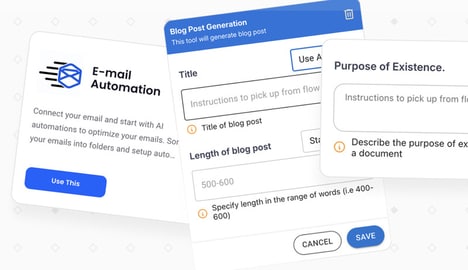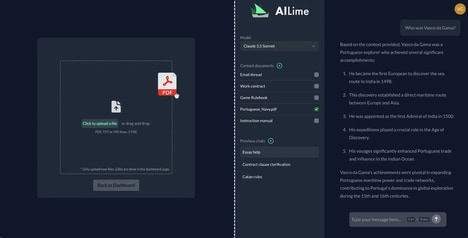
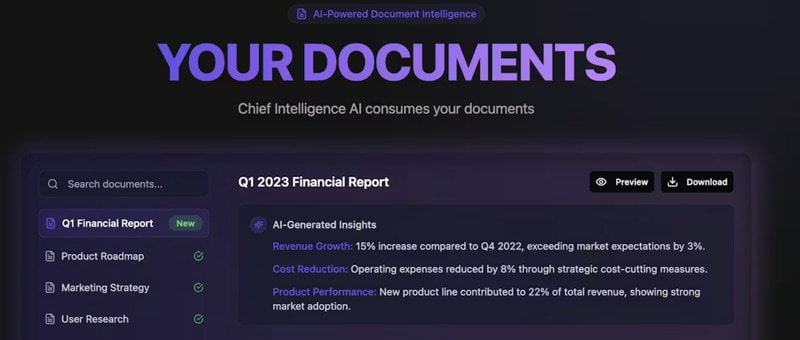
Chief Intelligence AI is a platform that enables organizations to create custom large language models (LLMs) using internal meetings and documents as source data. By consolidating organizational knowledge into an AI-driven system, the tool allows teams to query and interact with proprietary information in natural language, enhancing accessibility and decision-making.
The platform can ingest structured and unstructured content, including notes, presentations, and reports, to provide context-aware insights. From a business perspective, Chief Intelligence AI addresses challenges around knowledge management, information retrieval, and meeting productivity by transforming dispersed data into a centralized, interactive resource. Organizations can leverage this approach to accelerate research, streamline workflows, and reduce time spent locating information. The platform highlights the growing trend of customizing AI models for enterprise-specific intelligence and operational efficiency.
Image Credit: Chief Intelligence AI
Key Themes Behind This Trend
- Custom Enterprise Llms
- Organizations are building tailored language models from proprietary records to create company-specific reasoning and knowledge representations that outperform generic models on internal tasks.
- Meeting-to-knowledge Pipelines
- Automated conversion of meetings and notes into searchable knowledge artifacts is enabling continuous capture of tacit insights and contextualized decision histories.
- Context-aware Information Retrieval
- Search systems that incorporate document-level context and conversational queries are producing more relevant, situationally appropriate answers for complex enterprise problems.
Where This Applies
- Knowledge Management
- Centralized AI-driven knowledge bases are poised to replace fragmented repositories by offering coherent, queryable institutional memory across teams and time.
- Legal Services
- Contextual LLMs trained on firm documents and precedents can dramatically accelerate case preparation and risk analysis through more precise interpretation of internal materials.
- Research and Development
- R&D groups can gain faster hypothesis generation and literature synthesis when internal experiment notes and reports are integrated into a domain-specific language model.