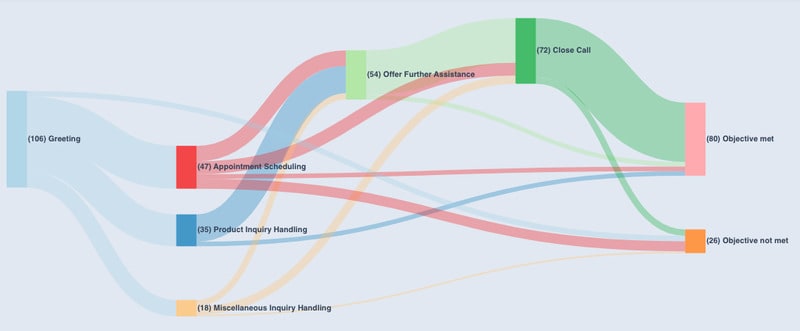
Canonical AI is a tool designed to enhance the performance and usability of Voice AI agents through detailed analytics. It supports developers by mapping caller journeys, identifying drop-off points, and providing both audio and conversational metrics.
These include technical indicators such as latency, as well as user intent data — like instances where callers request a human representative. By offering visibility into where interactions succeed or fail, Canonical AI enables more informed iteration and optimization of voice-based interfaces. For businesses deploying automated voice solutions in customer service or sales, this tool provides actionable insights to reduce friction and improve outcomes.
The platform's analytics can lead to more effective agent design, increased caller satisfaction, and better alignment with user expectations—key factors in the growing landscape of voice-powered customer experiences.
Image Credit: Canonical AI
What Makes This Trend Stand Out
- Advanced Voice Analytics
- The development of advanced voice analytics refines Voice AI agents by identifying user pain points, enabling iterative improvements that enhance caller interactions.
- User-centric Voice AI
- Emphasizing a user-centric approach, Voice AI platforms are evolving to prioritize transparency and user intent, offering personalized experiences that reduce caller frustration.
- Real-time Conversational Metrics
- The integration of real-time conversational metrics provides developers with immediate insights into system performance, driving rapid enhancements in voice interface design.
Sectors Adopting This
- Automated Customer Service
- Automated customer service is being transformed by voice analytics technologies that streamline agent-caller interactions, improving efficiency and customer satisfaction.
- Telecommunications
- In telecommunications, voice analytics offer telecommunications companies new methods to refine customer interactions, decreasing churn through targeted enhancements.
- Sales Enablement
- Sales enablement strategies are leveraging voice analytics to better understand consumer behavior, optimizing voice-driven sales tactics and customer engagement efforts.