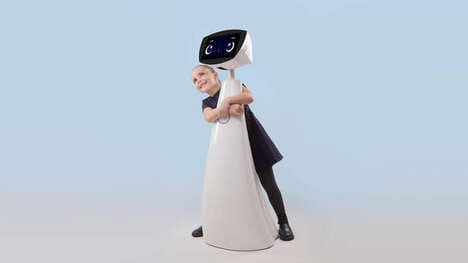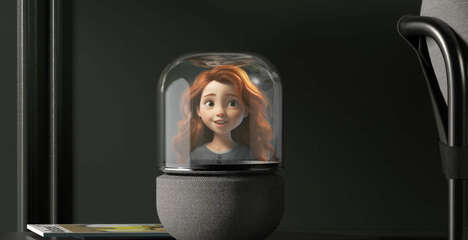
Wizkid is a robot that looks like a computer with a mobile neck but you don't need to know any computer language or use a keyboard or mouse or touch a screen to communicate with it. The primidi.com technology website describes the Wizkid in this manner:"Once it sees you, Wizkid focuses on you and follows your movement. Unlike a computer, which requires you to stop what you're doing and adapt your behavior and social interactions in order to use it, Wizkid blends into human space. There's no mouse and no keyboard. You don't touch anything. There's no language getting in the way. On Wizkid's screen you see yourself surrounded by a 'halo' of interactive elements that you can simply select by waving your hands. If you move away or to one side, Wizkid adapts itself to you, not the other way around. If you're with a friend, Wizkid finds and tracks both of you and tries to figure out your relationship, expressing surprise, confusion or enjoyment when it gets your response."
Wizkid acts as some sort of a mirror so that if the user wants Wizkid to play a certain CD for instance, all you need to do is "show" the CD to Wizkid. And if you happen to throw a party, the robot will snap pictures of your guests and create a visual summary of the party. As the above quotation says, Wizkid adapts to you and not the other way around. Cool.
Wizkid is the brainchild of French engineer Frederick Kaplan and an industrial designer by the name of Martino d'Esposito.
What's Driving This Trend
- Adaptive Robotics
- The trend of robots that adapt to human behavior presents disruptive innovation opportunities in various industries.
- Gesture-based Interaction
- The trend of gesture-based interaction with technology opens up opportunities for disruptive innovation in user interfaces and human-computer interaction.
- Personalized Robotics
- The trend of personalized robots that can understand and respond to individual needs provides disruptive innovation possibilities in various sectors.
Who This Affects Most
- Consumer Electronics
- The consumer electronics industry can utilize adaptive robotics to create intuitive and user-friendly devices that adapt to individual preferences and behaviors.
- Entertainment
- The entertainment industry can leverage gesture-based interaction to create immersive experiences and interactive entertainment products that engage audiences in new and exciting ways.
- Hospitality
- The hospitality industry can benefit from personalized robotics to provide customized services and experiences for guests, enhancing customer satisfaction and loyalty.