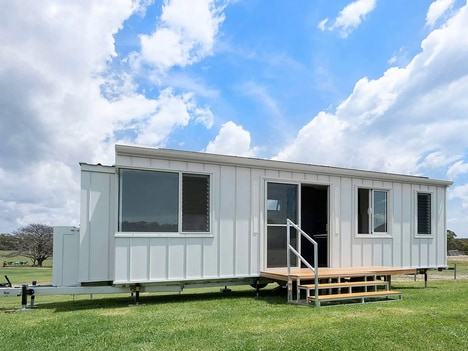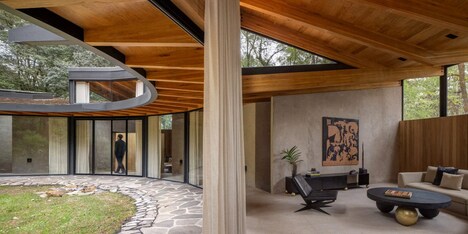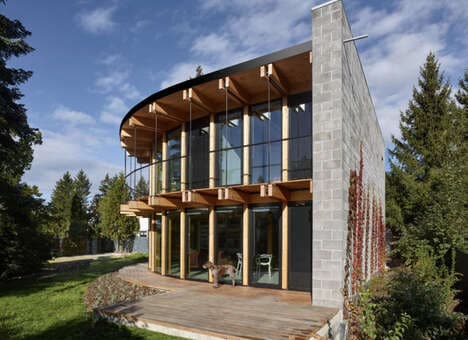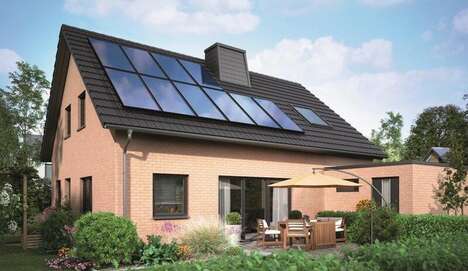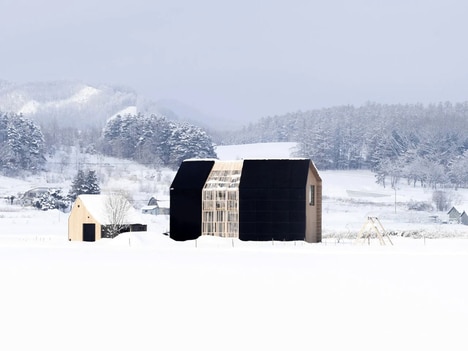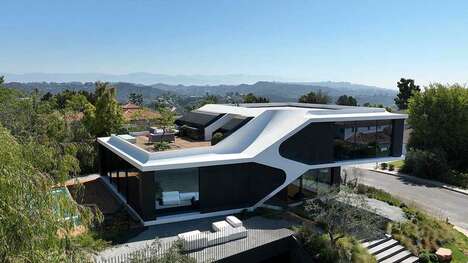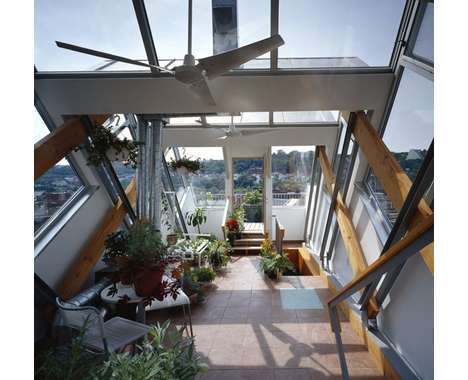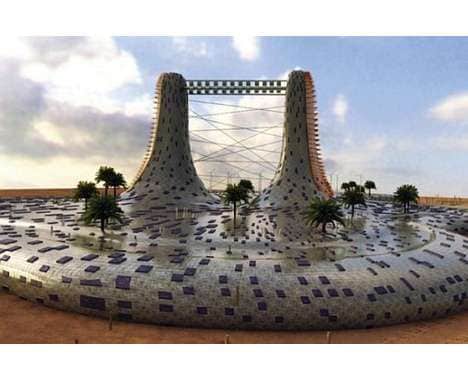
The eco-friendly B & W solar-powered house you see in the gallery above is the work of scientists from the University of Madrid. It's Team Spain's entry into the Solar Decathlon in Washington, D.C.
The B & W House has a roof equipped with thermal and photovoltaic solar panels; the roof rotates such that it is always in the best position to capture sunlight. At night, the roof rotates to lie flat, thereby reducing wind resistance.
This solar-powered house is expected to produce enough energy to not only power the home, but also donate energy back to the power grid.
What Makes This Trend Stand Out
- Rotating Roofs in Homes
- Incorporating rotating roofs in homes can optimize solar energy capture and reduce wind resistance.
- Solar-powered Houses
- The use of solar power in houses can enable energy self-sufficiency and even contribute excess energy back to the power grid.
- Eco-friendly Architecture
- The development of eco-friendly architecture can lead to sustainable homes and reduce reliance on traditional energy sources.
Sectors Adopting This
- Renewable Energy
- The renewable energy industry can benefit from advancements in technologies like rotating roofs and solar-powered houses, creating opportunities for innovation and growth.
- Construction and Real Estate
- The construction and real estate industry can embrace eco-friendly architecture to meet the demand for sustainable and energy-efficient homes, driving market differentiation and attracting environmentally conscious customers.
- Smart Home Technology
- The incorporation of rotating roofs and solar power in houses presents opportunities for the smart home technology industry to develop innovative systems and integrations for efficient energy management.