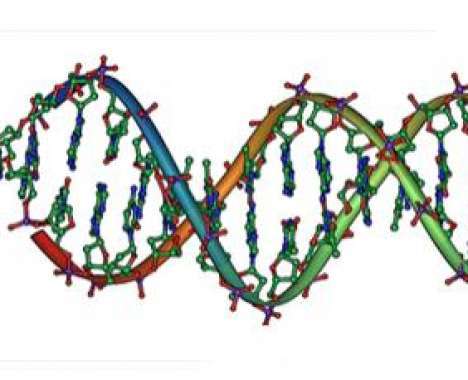
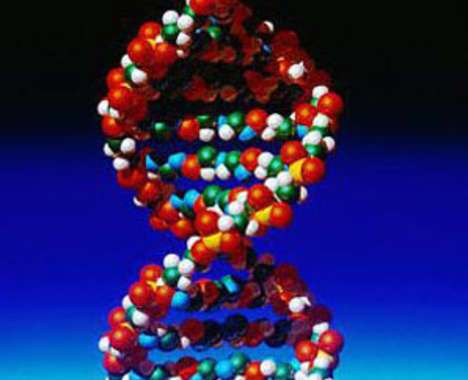
Researchers at the Chalmers University of Technology in Gothenburg, Sweden have developed a way to make self-assembling fiber optic cables out of DNA, the very stuff all life is based upon. How did they do it?
According to Bo Albinsson, “(They) used a single type of chromophore called YO as their energy mediator. It has a strong affinity for DNA molecules and readily wedges itself between the ‘rungs’ of bases that make up a DNA strand. The result is strands of DNA with YO chromophores along their length, transforming the strands into photonic wires just a few nanometres in diameter and 20 nanometres long. That’s the right scale to function as interconnects in microchips.”
Because they’re self-assembling, there’s variation in where the chromophores lie, and so the amount of light conducted by these strands isn’t consistent--yet.
Improving on this technology may very well impact solar cell efficiency. For that matter, this technology could conceivably be used anywhere you may need light to run a chemical, electrical or physical process.
Why This Trend Is Growing
- Self-assembling DNA Fiber Optic Cables
- Opportunity to disrupt the telecommunications industry by creating faster and more efficient fiber optic cables using self-assembling DNA strands.
- YO Chromophore as Energy Mediator
- Disruptive innovation opportunity in the field of renewable energy by using YO chromophore in solar cells to improve efficiency.
- Nanotechnology Interconnects for Microchips
- Potential for disruptive advancements in the semiconductor industry by utilizing self-assembling DNA strands as nanoscale interconnects in microchips.
Industries Being Reshaped
- Telecommunications
- Opportunity for disruptive innovation in the telecommunications industry through the development of self-assembling DNA fiber optic cables.
- Renewable Energy
- Potential for disruptive innovation in the renewable energy industry by incorporating YO chromophore in solar cells to improve their efficiency.
- Semiconductor
- Disruptive innovation opportunity in the semiconductor industry through the use of self-assembling DNA strands as nanoscale interconnects for microchips.