
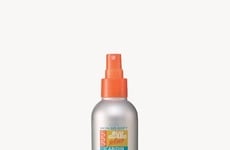




Mimikai Processes Wild Tomato Plants for Its Repellent
References: cincinnati
Mimikai has introduced the first new active ingredient for insect repellent approved by the Environmental Protection Agency in over 25 years, and the name of this innovation is Undecanone — a plant-derived compound discovered in wild tomato plants and developed through advanced biomimicry.
Undecanone offers scientifically proven protection against mosquitoes and ticks. The formulation is backed by over five years of rigorous testing through more than 35 controlled IRB-approved arm-in-cage studies, multiple EPA-approved protocol field trials, and a review by the Human Studies Review Board. Mimikai claims that its innovation performs as effectively as conventional standards like DEET, which was introduced in 1940, and Picaridin, introduced in 1980. The wild tomato plant-derived ingredient, however, does not force consumers to choose between effectiveness and personal health and safety.
Mimikai has been recognized on Fast Company's Most Innovative Companies list for 2026 and has secured strategic retail partnerships with the likes of Credo Beauty, Grove Collective, REI, Nordstrom, Erewhon, Goop, and Amazon.
Image Credit: Mimikai
Undecanone offers scientifically proven protection against mosquitoes and ticks. The formulation is backed by over five years of rigorous testing through more than 35 controlled IRB-approved arm-in-cage studies, multiple EPA-approved protocol field trials, and a review by the Human Studies Review Board. Mimikai claims that its innovation performs as effectively as conventional standards like DEET, which was introduced in 1940, and Picaridin, introduced in 1980. The wild tomato plant-derived ingredient, however, does not force consumers to choose between effectiveness and personal health and safety.
Mimikai has been recognized on Fast Company's Most Innovative Companies list for 2026 and has secured strategic retail partnerships with the likes of Credo Beauty, Grove Collective, REI, Nordstrom, Erewhon, Goop, and Amazon.
Image Credit: Mimikai
Trend Themes
-
Plant-derived Active Ingredients — A resurgence in botanically sourced actives is creating alternatives to long-standing synthetic repellents by marrying efficacy with perceived health benefits.
-
Biomimicry-based Pest Control — Leveraging natural defense compounds from wild species signals a movement toward lab-optimized biochemistries that mimic evolutionary solutions for scalable pest protection.
-
Safety-first Repellent Adoption — Consumers are increasingly privileging human-safety and regulatory-backed testing data alongside performance, reshaping expectations for product claims and formulation transparency.
Industry Implications
-
Personal Care and Beauty — Broader beauty assortments are beginning to incorporate clinically validated, plant-derived actives that align with clean-beauty narratives while competing on efficacy.
-
Outdoor Recreation and Retail — Outdoor brands and specialty retailers face growing demand for high-performance repellents that match technical requirements for hikers, campers, and travel markets.
-
Agricultural Bioproducts — Crop science and bioproduct manufacturers are positioned to translate plant defense chemistries into commercial-scale extracts and active ingredients for pest management applications.
7.2
Score
Popularity
Activity
Freshness