
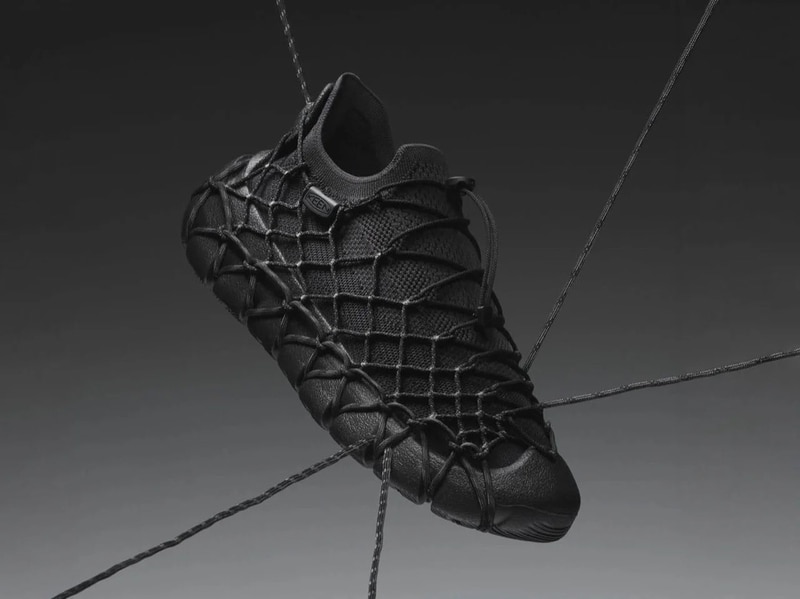



KEEN UNEEK 360 Uses a Modular Cord System for Repairable Construction
References: keenfootwear
The KEEN UNEEK 360 is a zero-glue footwear design that replaces adhesives with a cord-based cage structure to hold the shoe together. The upper is formed through interwoven cords that wrap around the foot and anchor directly into the sole, creating a mechanical assembly instead of bonded layers. This construction removes traditional stitching and gluing, relying on tension and structure to maintain shape and support. The design continues KEEN’s UNEEK line, which focuses on two-cord construction adapted here into a more enclosed, performance-oriented silhouette.
The modular system allows individual components to be replaced rather than discarding the entire shoe. Parts of the cord cage and structural elements can be swapped out if damaged, extending the product’s lifespan. The outsole and midsole are integrated into the system to support flexibility while maintaining stability underfoot. The shoe is built for disassembly, with components designed to be separated and reconfigured using interchangeable parts.
Image Credit: KEEN
The modular system allows individual components to be replaced rather than discarding the entire shoe. Parts of the cord cage and structural elements can be swapped out if damaged, extending the product’s lifespan. The outsole and midsole are integrated into the system to support flexibility while maintaining stability underfoot. The shoe is built for disassembly, with components designed to be separated and reconfigured using interchangeable parts.
Image Credit: KEEN
Trend Themes
-
Modular Product Design — A shift toward interchangeable components enables products to be customized, upgraded, and reconfigured over time, disrupting single-use replacement cycles.
-
Repairable Consumer Goods — Repair-first architectures that allow targeted part swaps extend service life and challenge disposable consumption models.
-
Zero-glue Manufacturing — Adhesive-free assembly techniques using mechanical interlock and tension systems reduce chemical inputs and open new pathways for recyclable and disassemblable products.
Industry Implications
-
Footwear — Shoes constructed around corded cages and modular soles present opportunities for durable, serviceable product lines that shift value from frequent replacement to long-term ownership.
-
Apparel and Textiles — Garments designed for mechanical assembly and part-level replacement could transform supply chains by enabling in-field repairs and component-level recycling.
-
Product Aftermarket Services — A service ecosystem focused on replacement modules, refurbishing, and part distribution can create recurring revenue and reduce pressure on primary manufacturing.
10
Score
Popularity
Activity
Freshness