



Casio Adds the GBX-H5600 to its G-LIDE Range
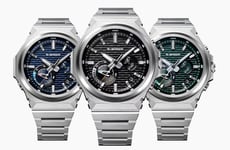
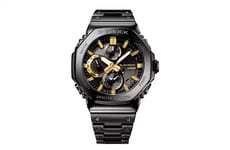
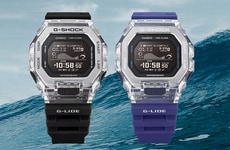
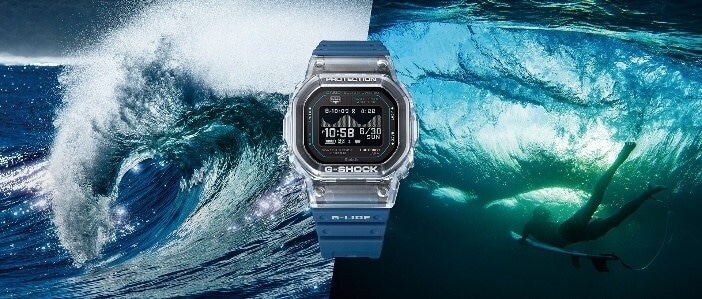
Casio has added a new model to its G-SHOCK G-LIDE line of shock-resistant watches — the GBX-H5600. This innovation combines a heart rate monitor with tide graph and moon data functions, marking the first time these features have appeared together in a G-LIDE timepiece.
The GBX-H5600 shock-resistant watch uses an optical heart rate sensor and an accelerometer to track physical condition in real time, while also measuring distance, calories burned, and other metrics for activities such as running, walking, gym workouts, and interval training. The sensor data is processed using science-backed algorithms from Polar Electro, a well-known name in sports technology, and results can be viewed in detail through the CASIO WATCHES smartphone application. For outdoor and water sports enthusiasts, the tide graph and lunar phase information remain core to the watch's identity.
Image Credit: Casio
The GBX-H5600 shock-resistant watch uses an optical heart rate sensor and an accelerometer to track physical condition in real time, while also measuring distance, calories burned, and other metrics for activities such as running, walking, gym workouts, and interval training. The sensor data is processed using science-backed algorithms from Polar Electro, a well-known name in sports technology, and results can be viewed in detail through the CASIO WATCHES smartphone application. For outdoor and water sports enthusiasts, the tide graph and lunar phase information remain core to the watch's identity.
Image Credit: Casio
Trend Themes
-
Integrated Biometrics and Environmental Data — Wearables Combining Heart-Rate Monitoring With Tide And Lunar Information Open Paths For Devices That Deliver Contextualized Performance Metrics For Both Land And Water Activities.
-
Ruggedized Wearable Tech — Shock-Resistant Designs With Advanced Sensors Point Toward Durable Consumer Electronics That Maintain Clinical-Grade Data Capture In Extreme Conditions.
-
App-linked Performance Ecosystems — Smartphone-Connected Watches That Aggregate Sensor Outputs And Algorithmic Analysis Enable New Ecosystems Centered On Longitudinal Athlete Data And Third-Party Integrations.
Industry Implications
-
Sports Technology — The Combination Of Optical Heart-Rate Sensors And Proven Algorithms Signals Opportunities For Novel Training Tools And Subscription Analytics Tailored To High-Intensity Sports.
-
Outdoor Recreation Equipment — Waterproof, Tide-Aware Timepieces Suggest Potential For Cross-Category Products That Blend Traditional Outdoor Gear With Embedded Environmental Sensing.
-
Smartwatch Manufacturing — Integrating Robust Mechanical Engineering With Advanced Sensor Suites Points To A Market For Premium, Purpose-Built Watches Targeting Extreme-Sports Consumers.
8.3
Score
Popularity
Activity
Freshness