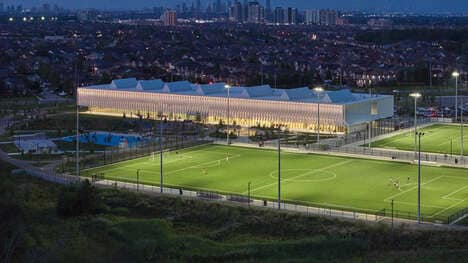
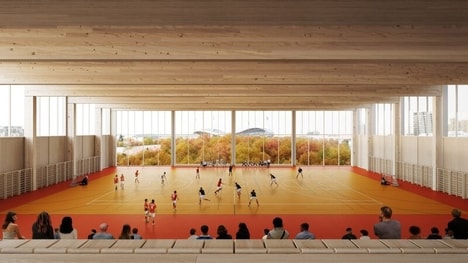
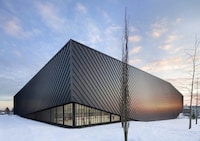
The Rosemary Brown Recreation Centre in Burnaby, British Columbia was envisioned by hcma architecture + design. The building represents a modern reimagining of the traditional ice arena as it blends high-performance sports facilities with a welcoming community hub.
The Rosemary Brown Recreation Centre cost $49.5 million to develop and spans 91,999 square feet. The facility features two NHL-sized rinks that are arranged in an L-shape and connected by a central lobby that serves as a vibrant gathering space. Unlike conventional ice arenas, the design prioritizes natural light, warmth, and inclusivity. hcma architecture + design utilized a hybrid steel-timber roof system with exposed mass timber to create this visually striking and inviting atmosphere. North-facing clerestories flood the rinks with daylight without compromising ice quality, while the use of materials like glulam beams and nail-laminated timber enhances the space’s acoustic and aesthetic qualities. The centre also includes multipurpose rooms, warm-side viewing galleries, and outdoor spaces.
Image Credit: Ema Peter
Why This Trend Is Growing
- Hybrid Steel-timber Structures
- The emerging use of hybrid steel-timber construction in public spaces highlights a shift towards environmentally friendly and aesthetically pleasing architectural designs.
- Daylight Integration in Sports Facilities
- Integrating natural lighting solutions into sports facilities offers a dual benefit of energy efficiency and improved user experience by creating inviting environments.
- Flexible Community-centric Spaces
- Modern sports complexes are evolving into multipurpose community hubs, emphasizing adaptability and inclusivity to cater to diverse user needs.
Industries Being Reshaped
- Architecture and Design
- Advancements in the use of sustainable materials and innovative design techniques redefine aesthetic and functional possibilities in architecture.
- Recreational Facilities
- Revolutionized recreational facilities focus on creating multifunctional spaces that serve both sports and community engagement activities.
- Sustainable Construction
- The sustainable construction industry is growing with innovative materials like glulam and nail-laminated timber, which offer enhanced acoustics and visual appeal.