





Redstone AI Uses Simulations To Validate Product Ideas Faster
Ellen Smith — February 17, 2026 — Tech
References: metabees.org
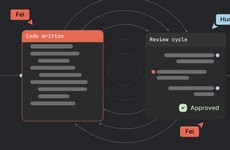
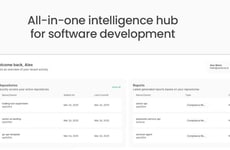
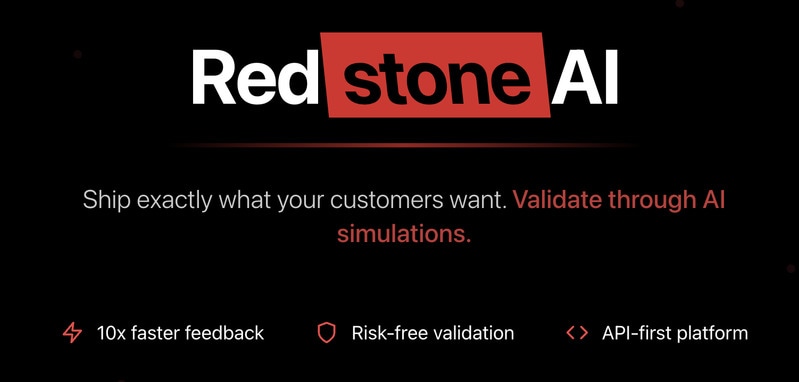
Redstone AI is a product discovery and validation platform designed to help teams make more confident build decisions earlier in the development cycle. It uses AI-driven review analysis and simulated customer personas to evaluate product ideas before engineering resources are committed.
By analyzing existing feedback, market signals, and modeled user behavior, the platform helps identify emerging trends, surface unmet needs, and prioritize features based on projected impact. This approach allows product, growth, and strategy teams to reduce reliance on assumptions or limited user interviews. From a business perspective, Redstone AI reflects a shift toward faster, lower-risk product validation, where insights are generated continuously rather than after launch. Its focus on simulation and synthesis supports leaner experimentation, clearer prioritization, and more efficient alignment between customer demand and product roadmaps.
Image Credit: Redstone AI
By analyzing existing feedback, market signals, and modeled user behavior, the platform helps identify emerging trends, surface unmet needs, and prioritize features based on projected impact. This approach allows product, growth, and strategy teams to reduce reliance on assumptions or limited user interviews. From a business perspective, Redstone AI reflects a shift toward faster, lower-risk product validation, where insights are generated continuously rather than after launch. Its focus on simulation and synthesis supports leaner experimentation, clearer prioritization, and more efficient alignment between customer demand and product roadmaps.
Image Credit: Redstone AI
Trend Themes
-
AI-simulated Customer Personas — Synthetic user profiles generated by AI enable reliable prediction of product adoption patterns and feature preferences before any physical prototyping.
-
Continuous Pre-launch Validation — Ongoing simulation-based testing shifts validation from a post-launch checkpoint to an integrated part of the development pipeline, shortening time-to-confidence for product bets.
-
Feedback-driven Roadmapping — Automated analysis of customer reviews and market signals allows prioritization of features based on projected impact rather than intuition or infrequent user interviews.
Industry Implications
-
Saas Product Development — Cloud-native platforms that embed simulated validation can reduce engineering waste by surfacing high-value features earlier in the build cycle.
-
Consumer Electronics — Hardware makers can use behavioral simulations to de-risk expensive tooling and manufacturing decisions through virtual user testing and anticipated market reception.
-
Market Research and Insights — Traditional research firms can be transformed by AI-driven synthesis that delivers continuous, scalable trend detection and unmet-need identification across large feedback datasets.
5.5
Score
Popularity
Activity
Freshness