





NECO Partnered with HP to Adopt 3D Printing Solutions
Colin Smith — November 5, 2025 — Business
References: h20195.www2.hp & 3dprint
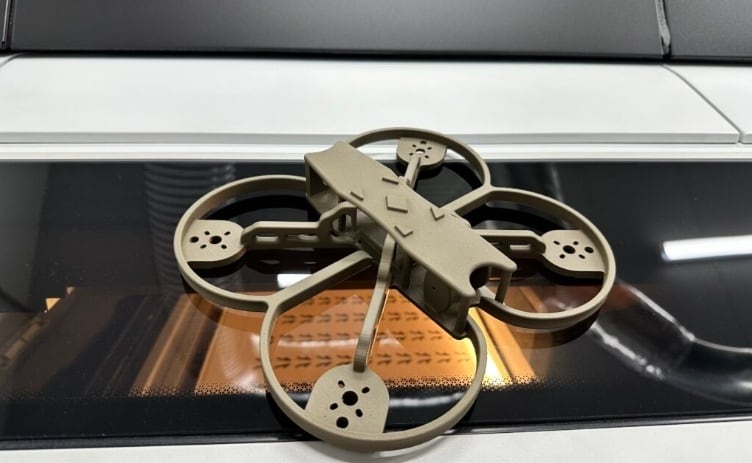
NECO has integrated HP Additive Manufacturing Solutions’ Multi Jet Fusion (MJF) technology into its production workflow to modernize drone component manufacturing, replacing traditional injection‑molding constraints with a digital, tooling‑free process that enables complex geometries and faster iteration. The partnership combines NECO’s contract‑manufacturing capability and UAV design requirements with HP’s MJF platform and materials, allowing NECO to produce end‑use parts such as fairings and structural components with built‑in lattice structures and integrated venting to improve strength‑to‑weight ratios and thermal performance.
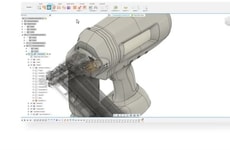
Alongside the hardware adoption, NECO implemented a streamlined digital workflow using Autodesk Fusion 360 to manage assemblies and accelerate design‑for‑additive processes, with customization support to align software tools to NECO’s production needs. The collaborators report that the MJF‑printed parts meet durability standards for aerospace applications, that NECO has scaled production to more than one million printed parts across use cases, and that the integrated approach has reduced upfront tooling costs while shortening development timelines for both internal projects and customer contracts.
Image Credit: NECO
Alongside the hardware adoption, NECO implemented a streamlined digital workflow using Autodesk Fusion 360 to manage assemblies and accelerate design‑for‑additive processes, with customization support to align software tools to NECO’s production needs. The collaborators report that the MJF‑printed parts meet durability standards for aerospace applications, that NECO has scaled production to more than one million printed parts across use cases, and that the integrated approach has reduced upfront tooling costs while shortening development timelines for both internal projects and customer contracts.
Image Credit: NECO
Trend Themes
1. Additive Manufacturing Transformation - The adoption of 3D printing, such as HP’s Multi Jet Fusion technology, is transforming manufacturing processes by enabling faster prototyping and production with complex geometries not possible with traditional methods.
2. Digital Workflow Integration - Incorporating advanced digital tools like Autodesk Fusion 360 streamlines design and production workflows, offering increased efficiency and customization capabilities tailored to modern manufacturing needs.
3. Advanced Material Utilization - 3D printing innovations are driving the use of novel materials with enhanced strength-to-weight ratios and thermal performance, pivotal for improving the functionality and efficiency of end-use products.
Industry Implications
1. Drone Manufacturing - The integration of 3D printing in UAV component production presents new opportunities to streamline design processes, reduce costs, and expand capabilities in lightweight and durable component fabrication.
2. Aerospace Engineering - By adopting additive manufacturing solutions, the aerospace industry can achieve more precise and high-performance parts production, facilitating breakthroughs in fuel efficiency and aircraft design.
3. Software Development for Manufacturing - Developing software solutions that tailor to the needs of 3D printing processes enables companies to enhance their production workflows and product customization, driving innovation in manufacturing technology.
8.2
Score
Popularity
Activity
Freshness