







Maastricht University and Ludii Identified A Roman Blocking Game
Edited by Colin Smith — April 15, 2026 — Tech
This article was written with the assistance of AI.
References: newatlas
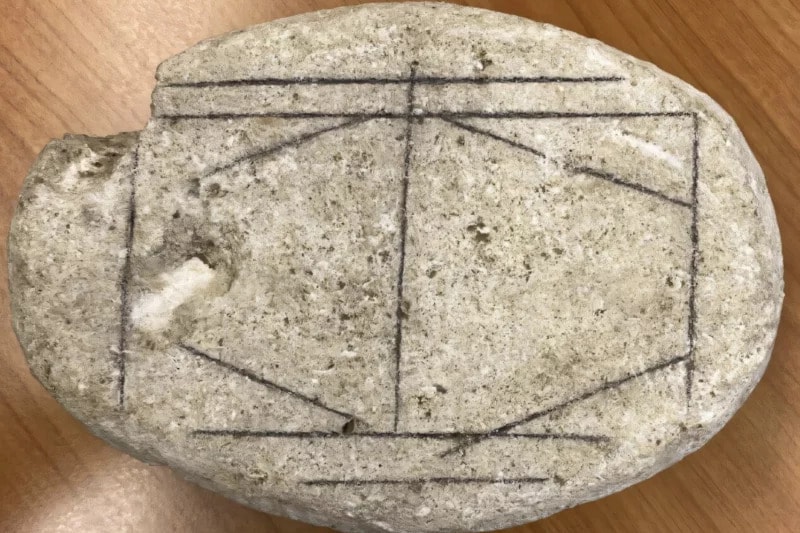
Researchers led by Maastricht University and collaborators used AI-driven simulated play to identify rules for an ancient Roman board etched on a limestone slab, featuring 3D scans and the Ludii system to test historical rule sets. The stone, excavated in 1984 at Coriovallum in the Netherlands, bore intersecting grooves and wear consistent with sliding pieces, prompting the team to program bots to replay hundreds of candidate rule sets.
The project combined scans from Leiden University, Flinders University, Université Catholique de Louvain and Restaura with Ludii simulations that ran thousands of matches using known ancient game mechanics. The simulations converged on nine consistent mechanics and pointed to a blocking-style strategy game, where players impede movement rather than capture pieces.
For consumers and cultural audiences, the study shows how AI can reveal lost play traditions and add interpretive rigor to material culture; archaeologists can now test behavioral hypotheses on artifacts without written rules. The method may expand how museums and researchers reconstruct intangible practices from surviving objects.
Image Credit: Flinders University
The project combined scans from Leiden University, Flinders University, Université Catholique de Louvain and Restaura with Ludii simulations that ran thousands of matches using known ancient game mechanics. The simulations converged on nine consistent mechanics and pointed to a blocking-style strategy game, where players impede movement rather than capture pieces.
For consumers and cultural audiences, the study shows how AI can reveal lost play traditions and add interpretive rigor to material culture; archaeologists can now test behavioral hypotheses on artifacts without written rules. The method may expand how museums and researchers reconstruct intangible practices from surviving objects.
Image Credit: Flinders University
AI tools for museums & ancient games
Informs near-term decisions on trying AI-driven cultural content, visiting exhibits, and using museum/education apps.
1 / 3
When was the last time you visited a museum or historical site?
2 / 3
How likely are you to try an AI-enhanced museum exhibit in the next 2 weeks?
3 / 3
Which would you be more likely to try in the next 2 weeks?
Trend Themes
1. AI-assisted Cultural Reconstruction - The use of machine-driven playtesting to infer lost rules from artifacts creates potential for reconstructing intangible cultural practices at scale and with quantitative support.
2. Simulation-driven Hypothesis Testing - Automated simulation frameworks enable rigorous comparison of behavioral models against physical wear patterns, offering new ways to validate archaeological interpretations.
3. Gamified Heritage Experiences - Recreated ancient games packaged as interactive experiences open avenues for immersive public engagement that blend education with historically grounded gameplay.
Industry Implications
1. Museums and Cultural Institutions - Institutions could integrate AI-reconstructed artifacts into exhibits, reshaping interpretive displays and visitor interaction through dynamically generated provenance narratives.
2. Archaeology and Research Labs - Research facilities stand to adopt simulation toolchains that transform fragmentary material evidence into testable behavioral models, altering methodology for field and lab studies.
3. Game Development and Entertainment - Studios and indie developers may exploit historically grounded mechanics and AI-inferred rule sets to create novel titles that differentiate through authentic ancient gameplay systems.
6.9
Score
Popularity
Activity
Freshness