





Fort Introduced the Fort Wearable Strength Band
Edited by Colin Smith — April 6, 2026 — Tech
This article was written with the assistance of AI.
References: newatlas
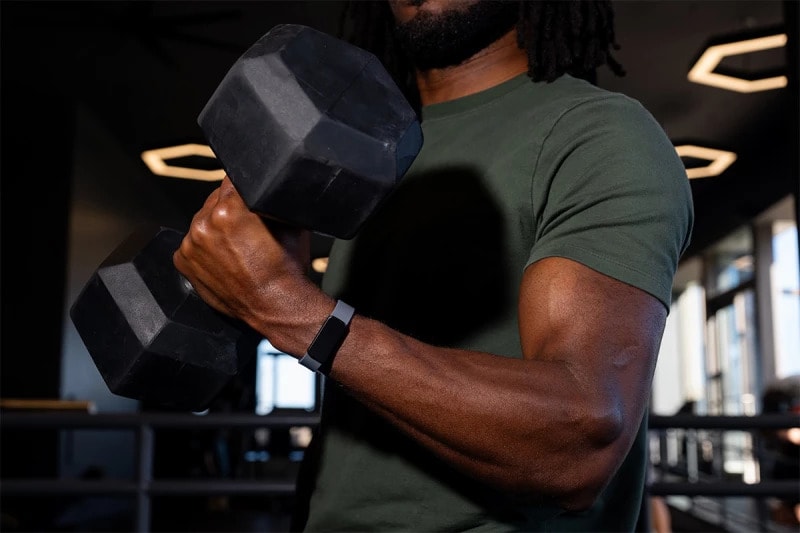
Fort introduced a screenless wearable called the Fort, a wrist band developed by a San Francisco startup of former Tesla engineers designed to log resistance training automatically, featuring high-frequency inertial sensing and a PPG heart-rate sensor. The device detects reps, sets and rest periods and pairs with a companion app that surfaces session scores, per-muscle volume, proximity to failure, time under tension and rep velocity.
Fort can magnetically attach its charging base to gym equipment to act as an external motion sensor for lower-body movements, and the system covers more than 50 exercises while also tracking sleep, HRV and VO2 max. With a quoted seven-day battery life, a $319 retail price and a required $80/year app subscription, Fort targets strength-focused exercisers who want automated volume and form feedback to accelerate progress and consistency.
Image Credit: Fort
Fort can magnetically attach its charging base to gym equipment to act as an external motion sensor for lower-body movements, and the system covers more than 50 exercises while also tracking sleep, HRV and VO2 max. With a quoted seven-day battery life, a $319 retail price and a required $80/year app subscription, Fort targets strength-focused exercisers who want automated volume and form feedback to accelerate progress and consistency.
Image Credit: Fort
Trend Themes
1. Purpose-built Strength Trackers - A shift toward devices specialized for resistance training creates demand for compact wearables that automatically quantify reps, volume and proximity-to-failure.
2. Screenless Wearable Monitoring - Market interest is growing in minimal, screenless bands that rely on companion apps and sensors to reduce distraction while collecting high-fidelity biomechanical data.
3. Sensor-integrated Gym Ecosystems - Magnetic attachment and external motion-sensing approaches point to ecosystems where equipment-anchored sensors augment body-worn devices for comprehensive movement tracking.
Industry Implications
1. Fitness Wearables - The wearable sector can be upended by low-profile devices that emphasize accuracy in resistance metrics and extended battery life over traditional smartwatch displays.
2. Gym Equipment Manufacturing - Exercise-machine makers face opportunities to embed or interface with sensors and magnetic charging bases to provide standardized external motion data across lower- and upper-body movements.
3. Sports Analytics Software - Analytics platforms are positioned to deliver new value by translating per-exercise volume, time-under-tension and rep-velocity streams into personalized training readiness and progression models.
7.2
Score
Popularity
Activity
Freshness