






Adidas Launched Its Adizero Adios Pro Evo 3 at 97 Grams
Adam Harrie — April 30, 2026 — Lifestyle
References: news.adidas
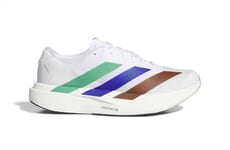
Adidas unveiled the 'Adizero Pro Evo 3,' a 97-gram race shoe built around a moonshot brief to create the brand's first sub-100-gram marathon shoe. The Adizero Adios Pro Evo 3 debuts at the London Marathon, priced at $500 in a limited release, with a wider drop planned for the fall marathon season.
The new 'ENERGYRIM' carbon-integrated technology works alongside next-generation 'Lightstrike Pro Evo' foam, with a 39mm stack, to deliver 11% higher forefoot energy return and a 1.6% improvement in running economy compared with the previous model. The upper of the shoe borrows construction principles from kitesurfing sail engineering to achieve minimal weight and a precise fit.
As the race for supershoe supremacy continues to intensify among major running brands, Adidas signals that engineering toward a specific weight ceiling can modernize high-performance race shoes.
Image Credit: Adidas
The new 'ENERGYRIM' carbon-integrated technology works alongside next-generation 'Lightstrike Pro Evo' foam, with a 39mm stack, to deliver 11% higher forefoot energy return and a 1.6% improvement in running economy compared with the previous model. The upper of the shoe borrows construction principles from kitesurfing sail engineering to achieve minimal weight and a precise fit.
As the race for supershoe supremacy continues to intensify among major running brands, Adidas signals that engineering toward a specific weight ceiling can modernize high-performance race shoes.
Image Credit: Adidas
Would you buy a $500 ultra-light marathon race shoe?
Helps decide how to cover high-end race shoes and what features, price points, and availability readers would act on.
1 / 3
When was the last time you bought running shoes?
2 / 3
If you were buying race-day shoes, how likely are you to pay $500?
3 / 3
Which would matter most when choosing race-day running shoes?
Trend Themes
-
Ultra-lightweight Performance — A push toward sub-100-gram race shoes reveals opportunities to rethink trade-offs among weight, cushioning and durability in elite footwear design.
-
Carbon-integrated Energy Return — The pairing of carbon frameworks with advanced foams suggests new pathways for improving running economy through integrated chassis and midsole systems.
-
Cross-discipline Material Borrowing — Adoption of sail-inspired uppers indicates growing value in translating aerospace and marine textile techniques into breathable, form-fitting performance gear.
Industry Implications
-
Athletic Footwear — The emergence of moonshot-weight targets points to premium product segments where performance-driven pricing and limited releases reshape brand differentiation.
-
Sports Technology — Quantifiable gains in energy return and running economy enable expanded demand for analytics-linked footwear that pairs hardware innovations with physiological performance data.
-
Advanced Materials Engineering — Developments in ultra-light fabrics and integrated carbon structures open possibilities for materials suppliers to deliver tailored laminates and composites optimized for endurance applications.
6.4
Score
Popularity
Activity
Freshness