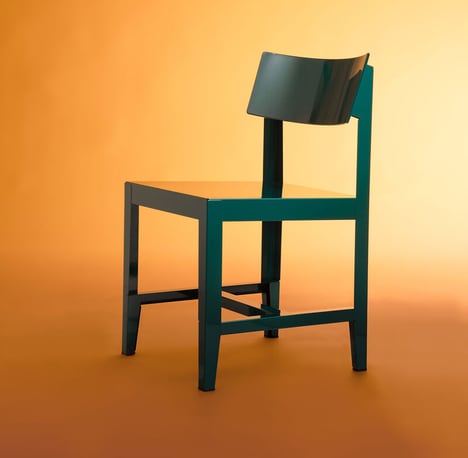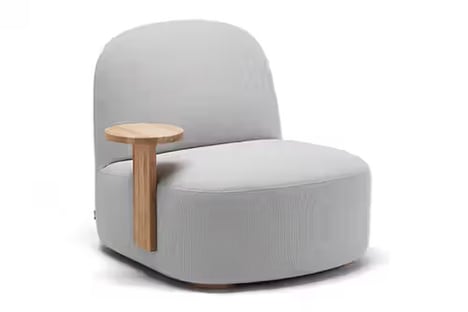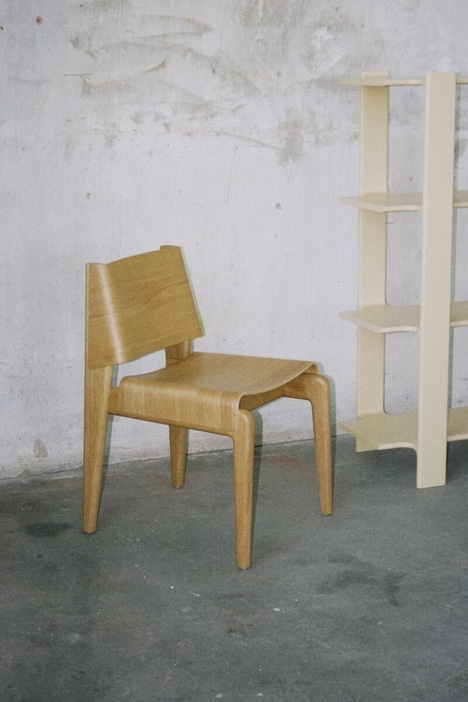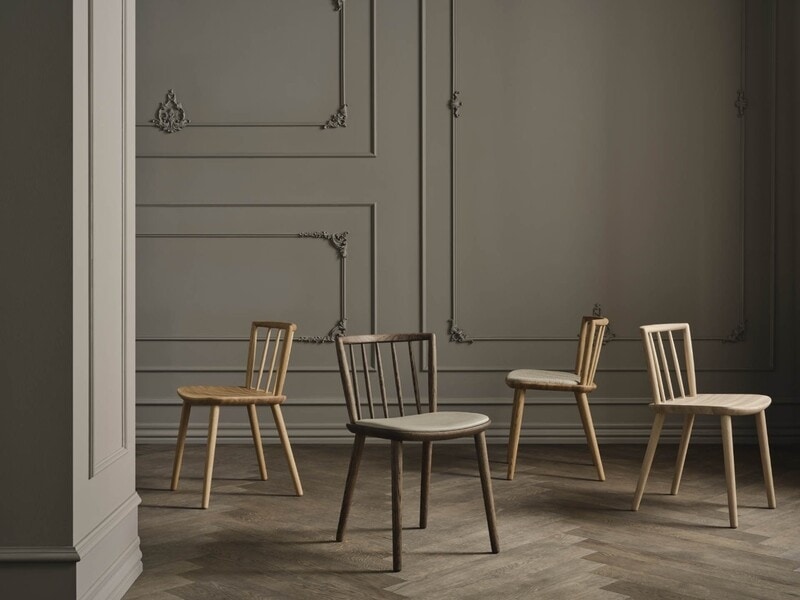
The Éter chair is a seating design that revisits elements of Danish modern furniture with a focus on softened form and tactile comfort. The chair features gently rounded edges and proportions that depart from strict angular geometry typically associated with mid-century pieces. Its frame consists of subtly curved armrests and legs that support a suspended seat and back panel, creating a visual balance between structural clarity and a relaxed profile.
Materials include molded plywood for the seat shell and solid timber components for the legs and arm supports. Upholstery, where applied, uses soft, tactile fabrics selected to complement the chair’s organic contours. Joinery is detailed to maintain smooth transitions between timber elements, and the overall height and seat depth are calibrated for everyday use in residential settings.
Image Credit: Bolia
Why This Trend Is Growing
- Softened Modernism
- A resurgence of rounded, relaxed silhouettes that reinterpret mid-century geometry presents chances to redefine contemporary home aesthetics with approachable, human-centered pieces.
- Tactile Materiality
- Designs prioritizing soft fabrics and warm timber surfaces create opportunities for sensory-rich products that emphasize comfort and touch over purely visual minimalism.
- Integrated Structural Joinery
- Visible yet refined connections between timber elements and molded components enable new expressions of craftsmanship that blend industrial production with artisanal detailing.
Industries Being Reshaped
- Residential Furniture
- High demand for everyday seating calibrated for comfort and proportion could shift product lines toward softly contoured, modular pieces that fit diverse living spaces.
- Hospitality Design
- Communal environments favoring relaxed, tactile furnishings offer possibilities for curated seating that balances durability with the inviting qualities of softened forms.
- Sustainable Wood Manufacturing
- Advances in molded plywood and precision joinery suggest scalable use of responsibly sourced timber to produce refined, low-waste components for contemporary seating.