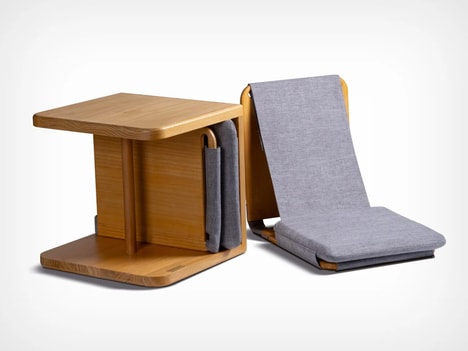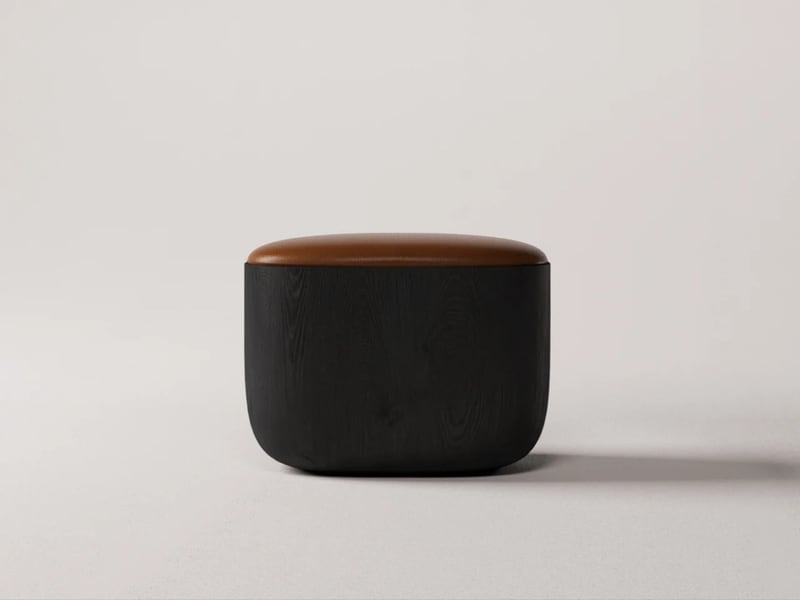
The Ishi stool by Mililab is a compact furniture piece developed from the leg structure of the studio’s Maru dining table, isolated and refined into a standalone object. The form is defined by a continuous inward curve that creates a monolithic silhouette, appearing visually thin from a distance while maintaining substantial mass up close. The stool is made from North American white oak, kiln-dried, hand-shaped, and dried again after assembly to stabilise moisture content before sealing.
The top cushion is detachable, revealing a flat wooden surface that allows the piece to function as a side table when inverted. Upholstery options include Kvadrat fabric, Dedar textile, or Italian leather, fitted to align flush with the wooden base. The stool stands at approximately 430 millimetres, allowing use alongside lounge seating, desks, or beds. It was developed through collaboration with Djordje Cebic and produced as part of Mililab’s ongoing furniture series.
Image Credit: Millilab
Key Themes Behind This Trend
- Convertible Furniture
- A single-piece object that alternates between seating and table functions opens opportunities for multifunctional products that maximize small-space utility.
- Monolithic Minimalism
- The visually thin yet substantial silhouette suggests a demand for sculptural, low-profile forms that blur the line between furniture and art.
- Artisanal Engineered Wood
- Hand-shaped, kiln-stabilised oak combined with precision finishing points to premium woodcraft offerings that merge traditional techniques with controlled engineering for longevity.
Where This Applies
- Furniture Design and Manufacturing
- Products that integrate removable elements and reversible functions could redefine modular product lines and production workflows.
- Hospitality and Interior Design
- Compact, dual-purpose pieces may reshape room layouts and furnishing strategies for boutique hotels and flexible public spaces.
- Sustainable Materials and Supply Chain
- Emphasis on local North American hardwoods and moisture-stabilising processes highlights potential for traceable, value-added timber supply chains focused on durability.