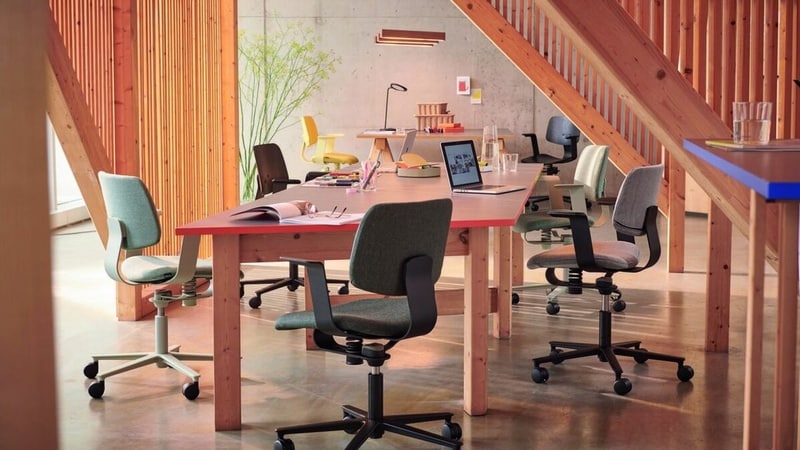
Designer Alina Schnizler created the WiChair for Wilkhahn as a task chair that encourages natural movement through a simplified construction. The design pairs FSC-certified plywood seat and backrest components with a curved torsion-elastic steel bracket that allows users to move forwards, backwards, and sideways while seated. The distinctive S-shaped support is available in five painted finishes and serves as both the chair’s structural and visual centerpiece. A spring-based adjustment mechanism beneath the seat enables users to modify the chair’s responsiveness to suit different preferences.
The WiChair was developed with repairability and material efficiency in mind. Wilkhahn reduced the design to 34 components and ensured the materials can be separated at the end of the product’s lifespan. Plastic is largely avoided throughout the construction, appearing only in optional cushioning elements.
Image Credit: Wilkhahn
Key Themes Behind This Trend
- Movement-enabled Ergonomics
- Demand for seating that supports multi-directional micro-movements is creating opportunities for products that blend dynamic comfort with simple mechanical systems.
- Material-efficient Modular Design
- Designs reduced to minimal, separable components and prioritized for repairability are opening the door to longer-lived, lower-waste furniture lifecycles.
- Visible Structural Aesthetics
- The elevation of structural elements to central visual features is shifting expectations toward pieces that communicate engineering and craft as part of their appeal.
Where This Applies
- Office Furniture
- Corporate buyers are increasingly valuing chairs that combine adjustable responsiveness with sustainable materials, altering procurement toward versatile, serviceable seating.
- Workplace Architecture
- Interior planners are showing preference for furnishings that enable active sitting and signal environmental responsibility, influencing spatial layouts and specifications.
- Healthcare and Rehabilitation
- Clinical settings that monitor movement and posture could benefit from seating solutions offering controlled mobility and easy sanitation without complex electronics.