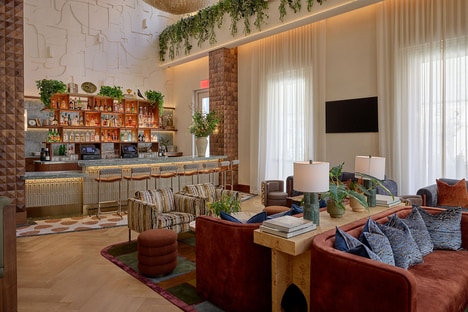
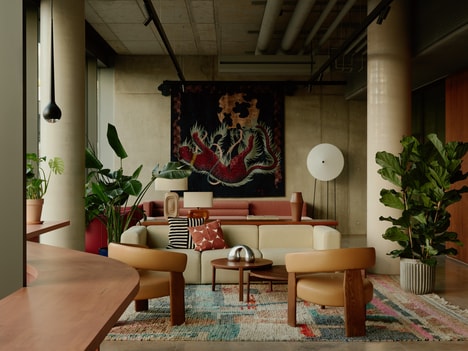
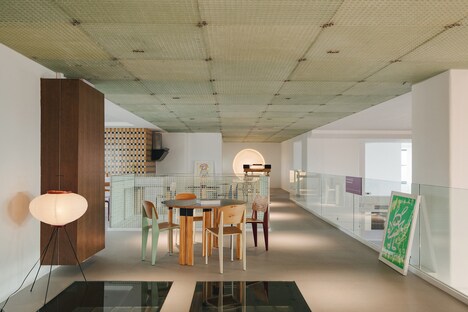
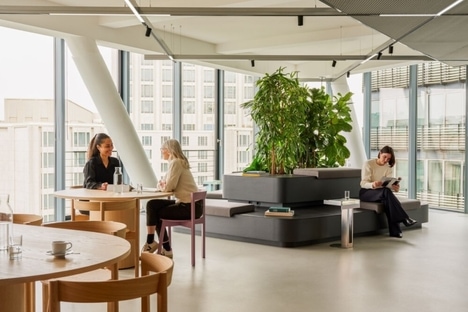
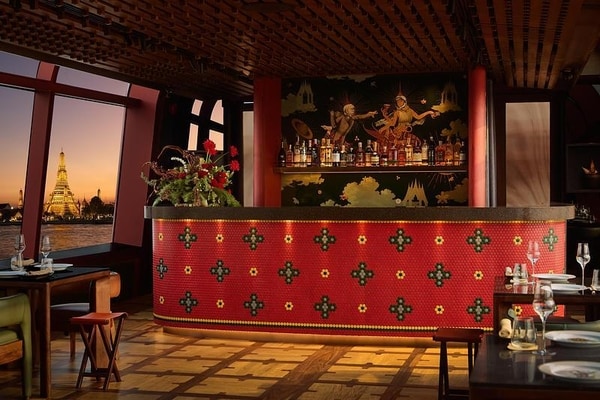
Kinzo has designed the shared spaces and living lobby for M40 — a hybrid timber office building located within the Macherei Berlin-Kreuzberg district. As part of this project, the studio has reimagined the "2,000 square meters of interior space on the ground and upper floors, complemented by 900 square meters of outdoor space."
In essence, the architecture firm transformed what was originally intended as a classic office property into an open urban block that includes a living lobby with a bar counter, a working garden with a coffee bar and plant beds, a town hall for events, four meet-and-move rooms, a work lab, a training room, a podcast studio, two fireside rooms, a library with a media corner, a restaurant, and two retail spaces. The design deliberately contrasts a concrete base with mastic asphalt and terrazzo flooring on the ground floor against an upper wooden structure featuring exposed beam ceilings and plant oases, while coral-colored chairs, camo-patterned counters, and dark red brick accents create visual tension between the two aesthetic systems.
Image Credit: Koy + Winkel
Why This Trend Is Growing
- Living Lobby Workspaces
- Hybrid office lobbies are evolving into hospitality-inspired social hubs where food, events, retail, and flexible work settings merge to increase building utility beyond traditional tenant hours.
- Biophilic Work Gardens
- Plant-rich indoor and outdoor work areas create new potential for wellness-focused office environments that blend productivity, community, and regenerative design cues.
- Multi-use Office Amenities
- Podcast studios, training rooms, libraries, and meet-and-move spaces reflect a shift toward amenity ecosystems that help commercial properties compete as culture-driven destinations.
Industries Being Reshaped
- Commercial Real Estate
- Office assets can be repositioned as open urban blocks, creating value through mixed-use programming rather than relying solely on conventional leased workspace.
- Architecture and Interior Design
- Material contrasts between concrete, timber, terrazzo, brick, and planting systems point to differentiated spatial identities that support more adaptive and experiential workplace design.
- Hospitality and Foodservice
- Bars, coffee counters, restaurants, and event-ready gathering areas introduce hospitality revenue models into office buildings while reshaping expectations for daily workplace experience.