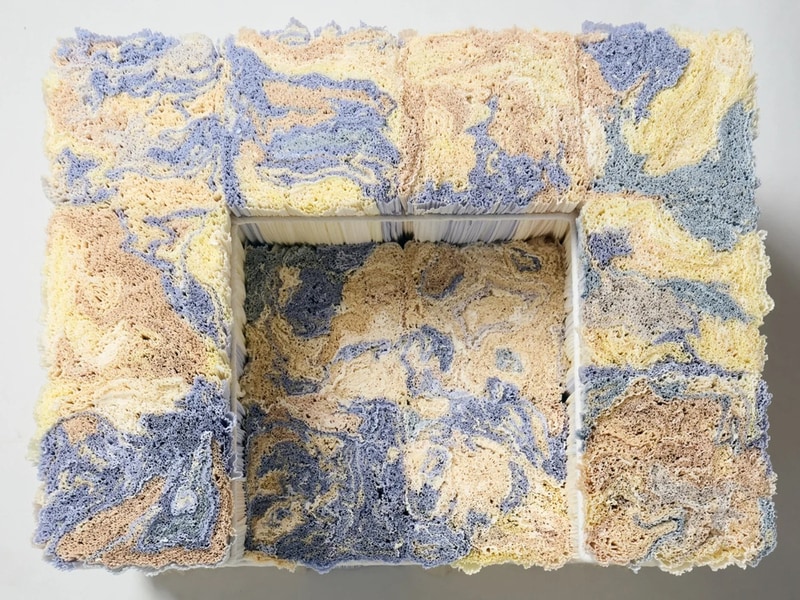
The Paper Log: Shell and Core is an exhibition developed by Satoshi Kondo of MIYAKE DESIGN STUDIO using compressed paper sheets left over from Issey Miyake’s pleating process. These sheets are typically used to protect fabric during production, then rolled, compacted, and discarded or recycled after use. Each compressed roll measures roughly 80 cm in height and 40 cm in width, with layered cross-sections that resemble tree rings when viewed from the end.
The exhibition was created in collaboration with Spanish architecture firm Ensamble Studio and is presented at the Issey Miyake Milan store during Milan Design Week 2026. It is divided into two series: Shell, where the paper is separated into thin, shaped pieces, and Core, where the compressed material is used to construct furniture prototypes including stools, chairs, and tables. The installation places both approaches throughout the space using the same material in different structural applications.
Image Credit: MIYAKE DESIGN STUDIO
Why This Trend Is Growing
- Circular Material Upcycling
- Repurposed pleating byproducts functioning as structural elements suggest new value chains that convert production waste into high-margin design inputs.
- Design-driven Waste Valorization
- By treating discarded protective materials as aesthetic and structural resources, designers can reconceptualize waste streams into signature brand artifacts.
- Layered Composite Paper Structures
- Layered compressed paper demonstrating wood‑like cross-sections points to lightweight, low-carbon composites that could replace conventional building or furniture materials.
Industries Being Reshaped
- Fashion Production
- Material stewardship within garment manufacturing can shift cost centers into product innovation pipelines using on-site reuse of protective media.
- Furniture Manufacturing
- Prototype seating and table pieces made from compacted paper indicate opportunities for affordable, sustainable furniture lines with distinct textural appeal.
- Retail and Exhibition Design
- Store installations showcasing reused production remnants create immersive brand narratives that blend retail experience with visible circularity.