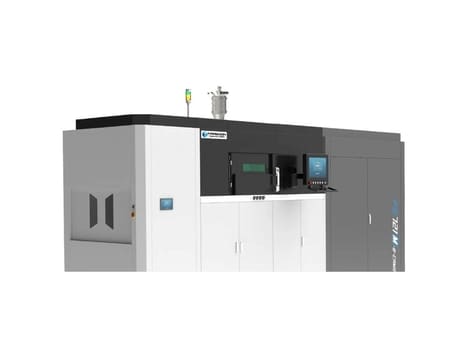
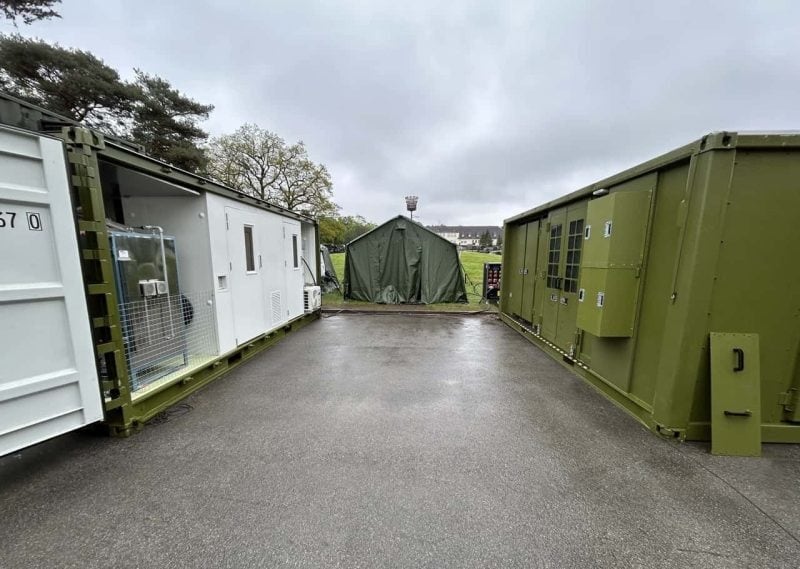
SPEE3D launched an Expeditionary Manufacturing Unit (EMU) for frontline metal additive manufacturing, demonstrated in a Tennessee case study with the Tennessee Army National Guard, the University of Tennessee and the Army Research Laboratory. The EMU is a cold-spray AM (CSAM) system designed to print, heat-treat and finish metal components rapidly, featuring on-site processing and compatibility with large-format TitanSPEE3D equipment.
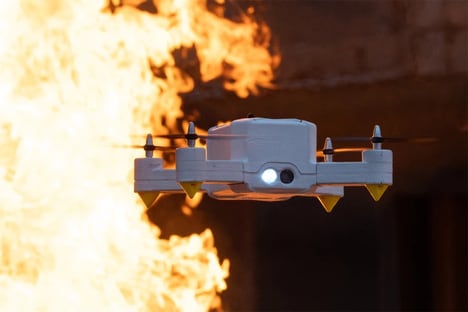
During a live training exercise at UT’s Defense Development and Applied Research Center, soldiers and engineers used the EMU to produce a Battle Lock Handle for an MRAP vehicle in under ten hours, then delivered the part by drone to simulate contested logistics. The workflow included design, printing, heat treatment and machining inside the expeditionary unit, showing an end-to-end rapid repair sequence.
The demonstration matters because it showed how localized metal AM can shrink repair timelines, reduce supply-chain exposure and maintain vehicle readiness in austere environments. For military and disaster-response users, the EMU points to a trend of moving compact, contingency manufacturing capabilities to forward locations to improve resilience and operational tempo.
Image Credit: SPEE3D
What Makes This Trend Stand Out
- Expeditionary Onsite Manufacturing
- Localized, containerized production units enable rapid end-to-end part fabrication and finishing near the point of need, collapsing traditional depot repair timelines.
- Cold-spray Additive Repairs
- Low-heat, high-deposition cold-spray techniques allow durable metal components to be built or refurbished with minimal post-processing and reduced material waste compared with conventional welding or casting.
- Drone-enabled Part Delivery
- Integrating unmanned aerial systems with forward manufacturing creates a resilient logistics loop that can bypass contested routes and shorten time-to-field for critical components.
Sectors Adopting This
- Defense and Military Logistics
- Forward-deployable AM systems shift supply-chain architecture toward distributed, mission-tailored maintenance hubs that lower dependence on long-range resupply.
- Disaster Response and Humanitarian Aid
- Portable metal-printing capabilities make it feasible to restore essential infrastructure and equipment quickly in austere environments where traditional supply chains are disrupted.
- Heavy Equipment Maintenance
- Onsite additive repair workflows support quicker return-to-service for large vehicles and machinery by enabling part fabrication and finishing without factory backlogs.