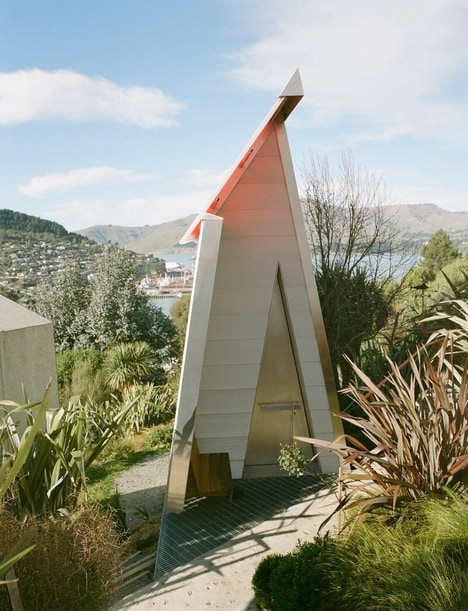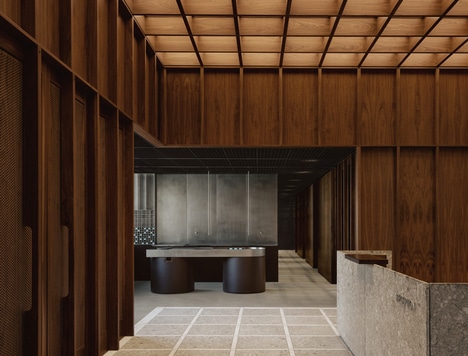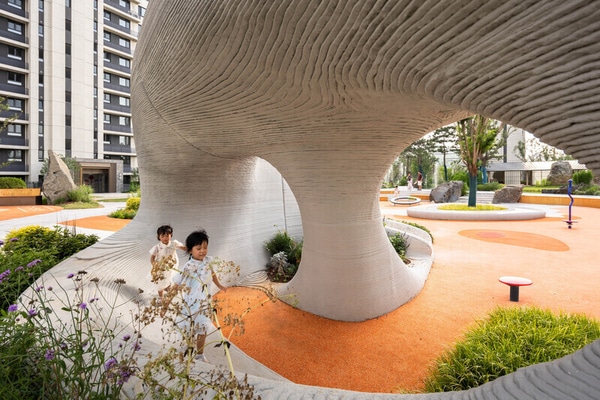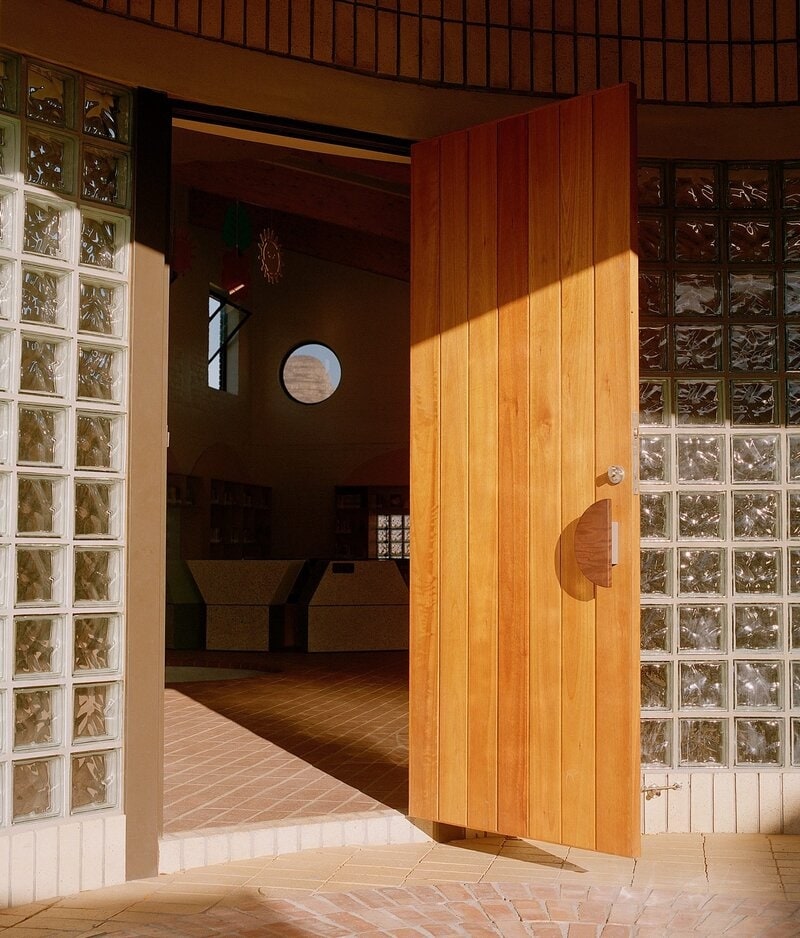
The Rahmah Library by The MAAK reimagines a corner of Rahmaniyeh Primary School in Cape Town’s District Six as a light-filled center for students and teachers. Built with reclaimed materials from the neighborhood, including bricks made from rubble of demolished homes, the library preserves the memory of a once-displaced community. Its design process involved workshops with local students, ensuring that the space reflected both their needs and their stories. The structure serves as a bridge between education and remembrance.
A gently sloped roof shelters the interior from harsh sunlight while opening views toward the surrounding mountains. Step-like seating areas, reading nooks, and open shelving define zones without walls, encouraging connection and curiosity. Soft daylight filters through glass-block walls, illuminating the textured brick and timber finishes. The Rahmah Library stands as an architectural expression of renewal, community, and the enduring power of shared history.
Image Credit: Kent Andreasen
What's Driving This Trend
- Community-centric Design
- Engaging local communities in the design process offers a unique opportunity to create spaces that reflect collective histories and meet specific needs.
- Sustainable Building Materials
- Reclaimed and locally sourced materials are being utilized to construct environmentally friendly structures that also carry cultural significance.
- Adaptive Educational Spaces
- Designing educational environments with flexible seating and open zones fosters an adaptable learning atmosphere that encourages interaction and exploration.
Who This Affects Most
- Education Infrastructure
- Reinvigorating school environments with student input and historical context can transform them into more engaging and meaningful learning spaces.
- Architecture and Design
- Architectural projects that incorporate community history and sustainable practices can stand out by promoting social cohesion and environmental responsibility.
- Urban Renewal
- Revitalizing community spaces using salvaged materials offers a pathway for sustainable and socially conscious urban development.