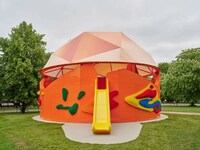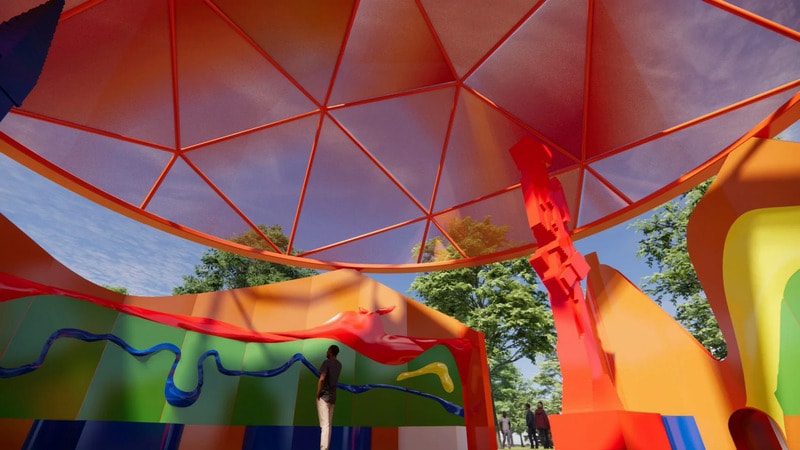
British architect Peter Cook has introduced a look at the new Play Pavilion made for children and decorated in Lego bricks. It is set to be built by the Serpentine Gallery in London with a bright orange build. It is set to open on June 11th aligned with World Play Day. The pavilion is topped with a geodesic dome roof with rounded walls decorated in Lego murals.
Cook explains, "The Play Pavilion is an opportunity to remind the public that architecture can be cheerful as well as focused, with a degree of mystery on first sight. We can see glimpses of people moving around inside, with children appearing from mystery places. Then, on entering, all is revealed. Cheerful architecture takes you beyond the day-to-day predictability of cause-and-effect. Just as in the tradition of pantomime, it sends you away with a smile on your face."
Image Credit: Serpentine
Key Themes Behind This Trend
- Cheerful Architecture
- Bright and playful architectural designs are emerging, shifting the narrative from merely functional spaces to creatively engaging environments that uplift moods.
- Interactive Play Spaces
- Architects are increasingly focusing on creating interactive environments that stimulate creativity and exploration, especially for children.
- Lego-inspired Structures
- Incorporating elements reminiscent of popular toys like Lego, architecture is blending familiarity and playfulness into physical structures.
Where This Applies
- Design and Architecture
- The design sector is embracing playful elements to transform how spaces are traditionally perceived and interacted with.
- Toy Manufacturing
- Companies in the toy industry have opportunities to collaborate with architects to integrate their products into large-scale, interactive builds.
- Cultural Institutions
- Museums and galleries are beginning to explore innovative spatial experiences, blending art, play, and architecture to engage broader audiences.