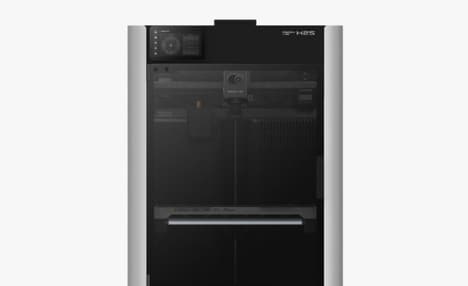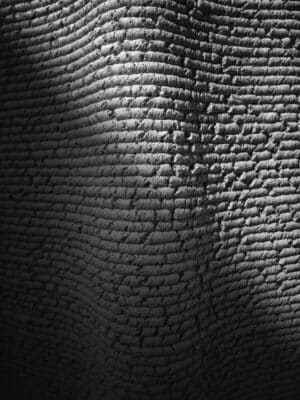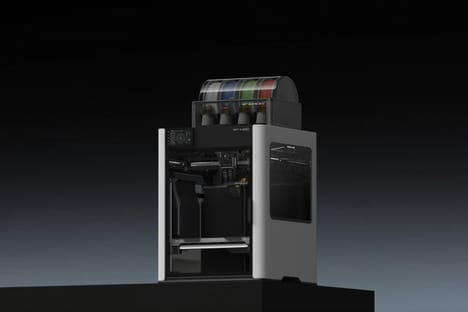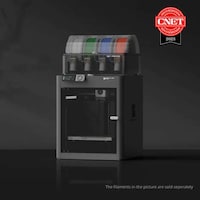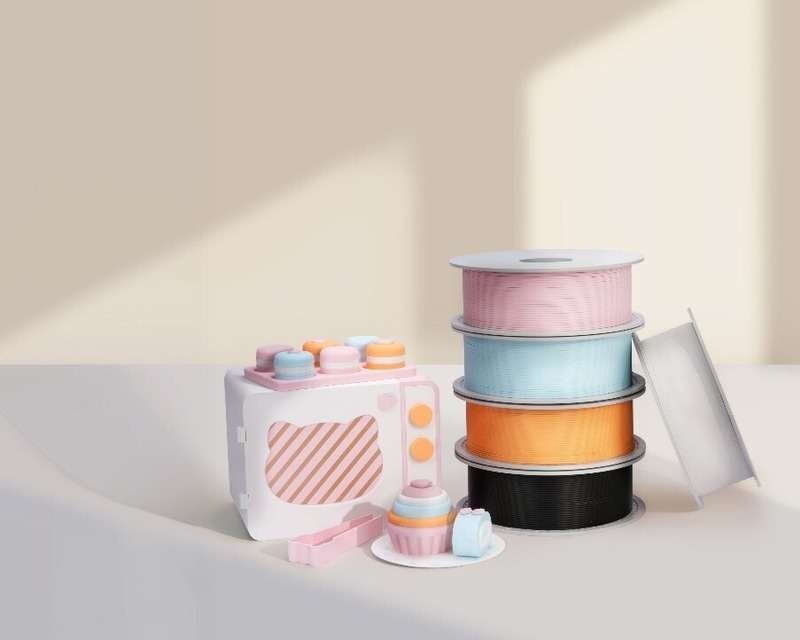
Bambu Lab, a rapidly growing consumer 3D printing company based in Austin, Texas, has introduced PLA Pure. This filament is engineered specifically for home environments with a formula limited to five food-safe ingredients.
PLA Pure is made with polylactic acid derived from corn and sugarcane, acrylic copolymer, color pigments, EBS, and talc. Each material is certified as compliant with the European regulation EU 10/2011 for materials intended to contact food, with raw materials sourced from reputable global suppliers including TotalEnergies Corbion, Dow, Chemours, and BASF.
Bambu Lab's PLA Pure filament has also earned UL 2904 GREENGUARD certification — "the recognized standard for 3D printer emissions that measures particulate matter and Volatile Organic Compounds (VOCs) for indoor air quality impact."
Image Credit: Bambu Lab
What's Driving This Trend
- Food-safe Home Fabrication
- Certified materials for consumer 3D printers create new potential for household production of kitchenware, storage accessories, and personalized food-contact objects.
- Low-emission Printing Materials
- Indoor air quality standards are becoming a competitive differentiator as cleaner filaments expand 3D printing into apartments, classrooms, and shared workspaces.
- Simplified Material Formulation
- Minimal-ingredient filament recipes signal a shift toward transparent, trust-based product design that can reduce safety concerns around consumer additive manufacturing.
Who This Affects Most
- Consumer 3D Printing
- Home printer ecosystems gain stronger mainstream appeal when certified food-grade consumables make everyday object creation feel safer and more practical.
- Food Packaging
- Personalized, small-batch food-contact components present an alternative to conventional packaging supply chains through localized production and material customization.
- Materials Science
- Bio-based polymers with verified safety and emissions credentials are reshaping opportunities for premium filament development across consumer and professional markets.