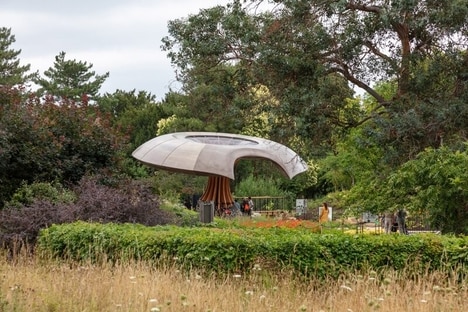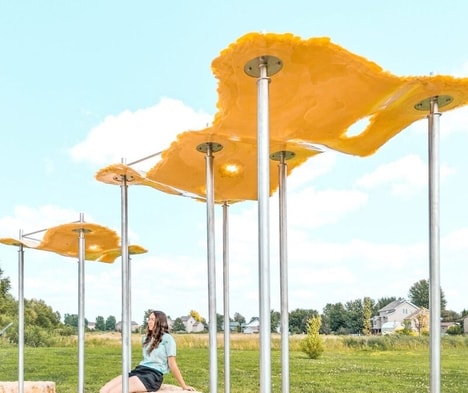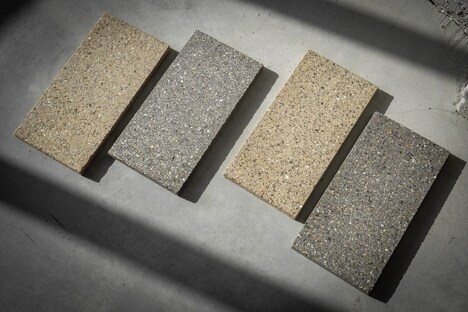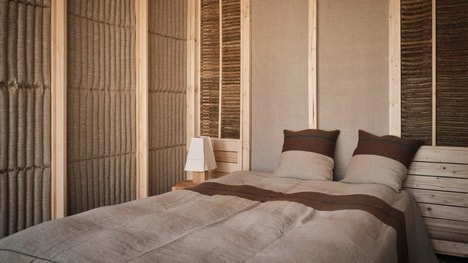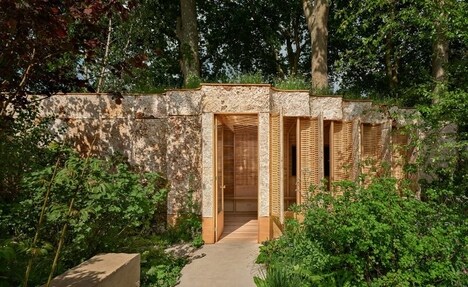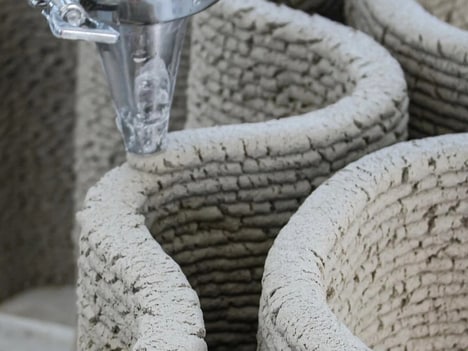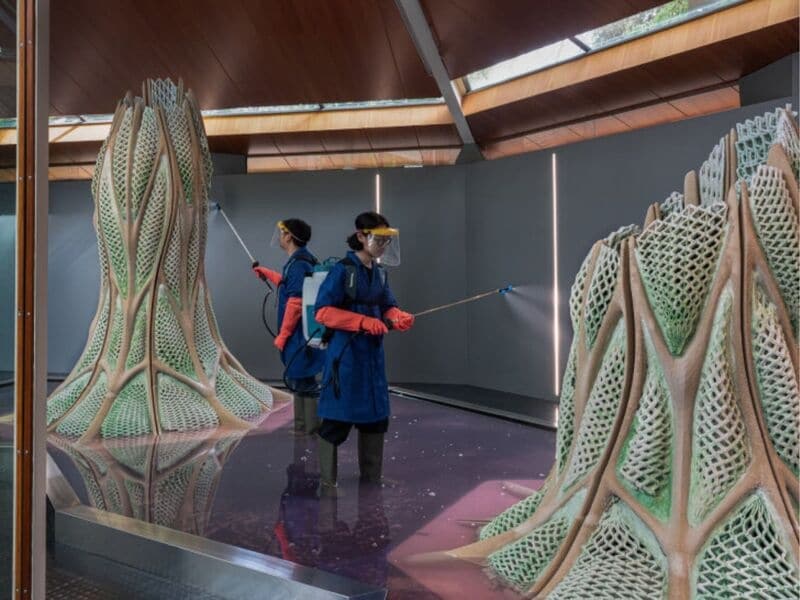
Picoplanktonics is a carbon-negative pavilion that captures CO₂ through living architecture. Designed by The Living Room Collective for the Canada Pavilion at the 2025 Venice Architecture Biennale, the project uses 3D-printed forms embedded with cyanobacteria. These microorganisms actively perform photosynthesis and biocementation—converting carbon into oxygen while hardening the structure itself. The result is a living system that not only reduces emissions but also absorbs and stores atmospheric carbon, challenging conventional ideas of inert architecture.
Printed with cyanobacteria integrated from the start, the pavilion can regenerate over time, adapting to humidity and environmental change. This fusion of biology, technology, and design reimagines what buildings can be—not just shelters, but self-healing, air-purifying structures that evolve with their surroundings. Picoplanktonics marks a visionary step toward sustainable, adaptive, and climate-responsive architecture rooted in natural intelligence.
Image Credit: The Living Room Collective
Why This Trend Is Growing
- Living Architecture
- The incorporation of biological elements like cyanobacteria in construction materials promises to revolutionize buildings into dynamic, self-sustaining ecosystems.
- Carbon-negative Design
- Emerging architectural practices transform structures into active carbon sinks, presenting an eco-friendly pivot that mitigates their environmental impact.
- Adaptive Bioarchitecture
- Buildings that utilize living materials capable of responding and adjusting to environmental changes offer a new paradigm in resilient urban design.
- Co2-capturing Techniques
- Innovations in biochemistry integrated into architecture create opportunities for structures to capture and store carbon, reshaping how urban environments interact with the atmosphere.
Industries Being Reshaped
- Sustainable Construction
- As demand for eco-friendly building practices grows, industries are increasingly focusing on integrating biotechnological advancements to create carbon-neutral or negative structures.
- Bioengineering
- The convergence of biological systems with architectural design fosters a new, interdisciplinary industry dedicated to developing living materials for construction.
- Environmental Technology
- Technological advances enabling the conversion of atmospheric carbon into structural elements or oxygen showcase opportunities for industries committed to combating climate change through innovative solutions.