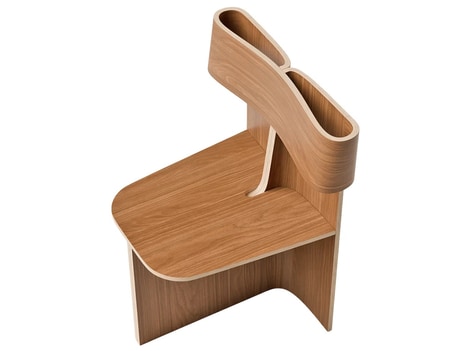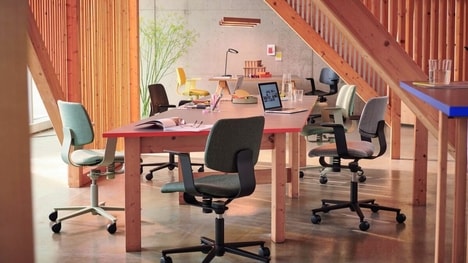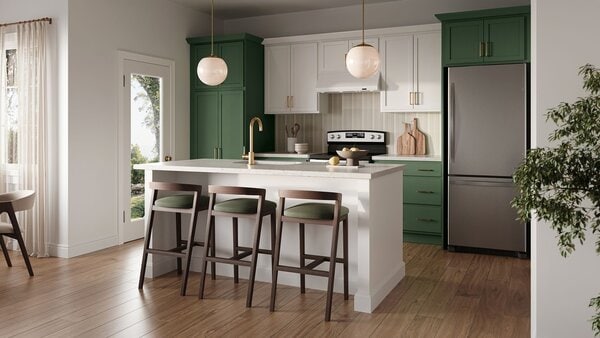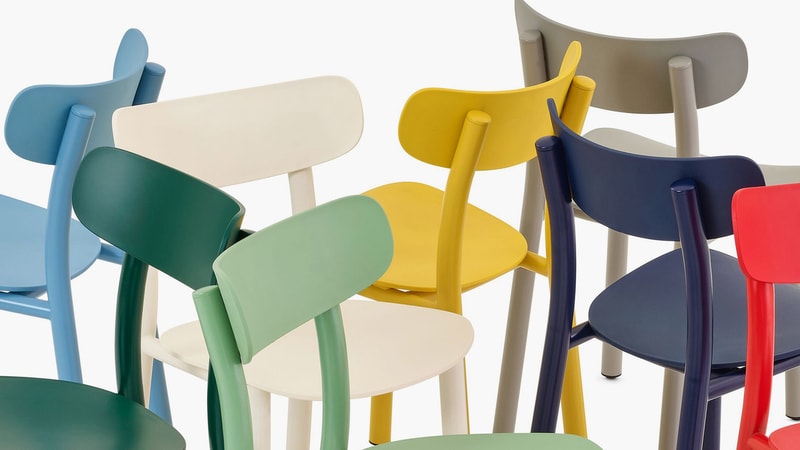
The Lotti chair is a seating design created by Japanese designer Keiji Takeuchi for contract furniture brand NaughtOne. Designed for hospitality and workplace environments, the chair combines a simple silhouette with carefully considered ergonomic details. Slightly oversized legs, an angled seat, and a choice of monochromatic or two-tone finishes give the design a distinctive character, while subtle shaping improves comfort during extended use. A gently dished seat and waterfall front edge help reduce pressure points, supporting a broader range of users than traditional café seating.
The chair is available with either a water-based lacquered oak plywood seat or a polypropylene seat containing a high percentage of recycled material. NaughtOne offers the steel frame in 16 colours, while the polypropylene version is available in 10 different hues.
Image Credit: NaughtOne
Key Themes Behind This Trend
- Serviceable Contract Seating
- Modular parts and durable frames are reshaping commercial seating around longer lifecycles, lower maintenance costs, and circular ownership models for high-traffic spaces.
- Comfort-first Café Furniture
- Subtle ergonomic features such as angled seats and pressure-reducing edges create differentiation in compact hospitality furniture without compromising simple visual profiles.
- Recycled Colour Customization
- High-recycled-content plastics paired with broad colour palettes signal a market opening for sustainable furniture that still supports distinctive brand expression.
Where This Applies
- Hospitality Furniture
- Restaurants, cafés, and hotels gain value from seating that balances comfort, durability, and visual flexibility across frequently refreshed interiors.
- Workplace Design
- Hybrid offices increasingly favor adaptable furniture systems that support informal collaboration zones while offering the resilience required for shared daily use.
- Sustainable Materials
- Recycled polypropylene and water-based finishes highlight growing demand for lower-impact material innovation in products designed for commercial longevity.