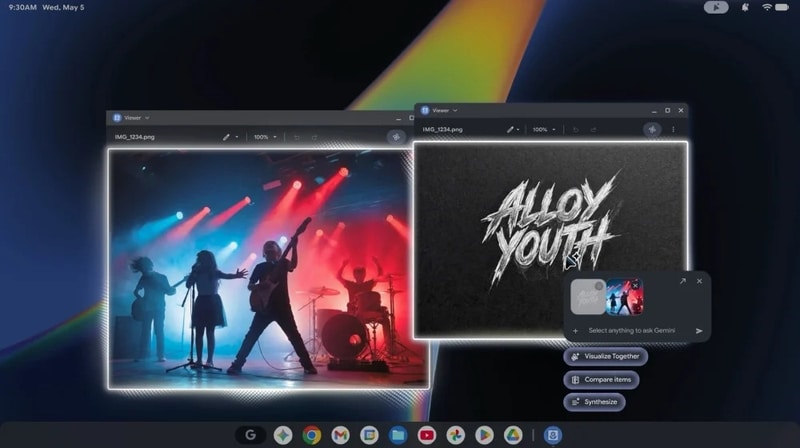
Google introduced GoogleBook, a new AI-focused laptop line built around its Gemini platform. The laptops feature on-device Gemini integration for writing, search, summarization, translation, and image generation tasks. Google said the devices include a dedicated Gemini key, AI-assisted multitasking tools, and personalized workflows connected across Google apps and services. The company presented the laptops during its annual Google I/O event alongside broader Gemini updates.
The GoogleBook lineup includes multiple models with OLED displays, aluminum bodies, high-refresh-rate screens, and all-day battery claims. Google said the devices support voice commands, live transcription, contextual search, and real-time collaboration tools powered by Gemini. The laptops also feature enhanced security systems, cloud syncing, and compatibility with Android devices. Google confirmed the series will launch in select global markets later this year, with later announcements of pricing to come.
Image Credit: Google
What's Driving This Trend
- On-device AI Integration
- Hardware-embedded AI models enable low-latency, privacy-preserving features that can redefine user expectations for offline productivity and real-time assistance.
- Dedicated Gemini-key and Input Shortcuts
- A single physical key for AI functions signals opportunities for new user interface paradigms that make generative and contextual tools instantly accessible.
- AI-assisted Multitasking and Cross-app Workflows
- Seamless AI-driven summarization, transcription, and contextual search across apps suggests novel workflow platforms that blur the lines between OS, apps, and cloud services.
Who This Affects Most
- Consumer Laptop Manufacturers
- Tight hardware-software co-design around AI capabilities creates openings for manufacturers to differentiate through specialized silicon, displays, and battery optimizations.
- Enterprise Productivity Software
- Integrated real-time collaboration and contextual AI features indicate potential for new subscription models and platform lock-in based on intelligent workflow capabilities.
- Cloud Services and Edge Computing
- Balancing on-device inference with cloud augmentation points to growing demand for hybrid infrastructures that optimize cost, latency, and model freshness.