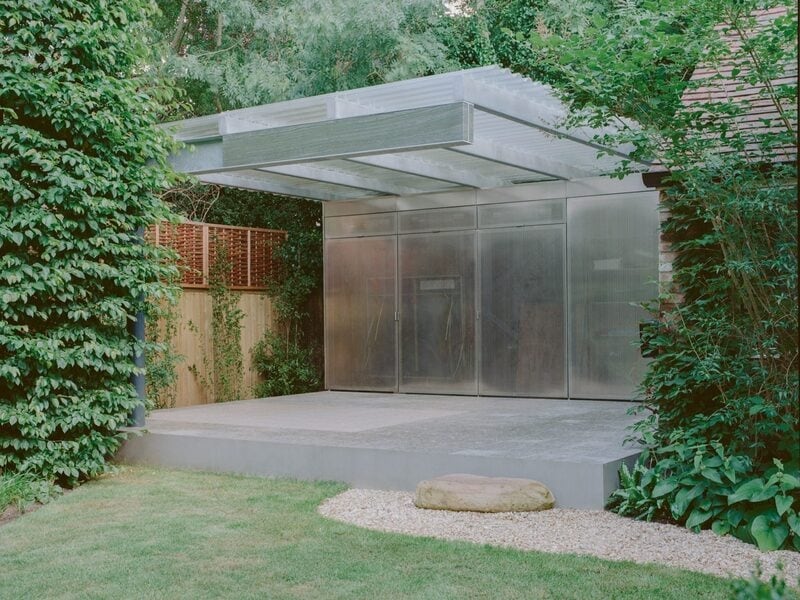
The Exeter Road Pavilion is a small timber structure designed by Neiheiser Argyros on a former school playing field in Exeter, England. The pavilion is positioned along the edge of the site and functions as a sheltered space for sitting and gathering, with views oriented across the open field. Its form is defined by a simple pitched roof supported by a series of timber posts, leaving the sides largely open to maintain visual and physical connection to the surrounding landscape.
The structure is constructed primarily from timber, with expressed framing and cladding used to give the pavilion a clear and legible presence. The roof overhang extends beyond the main footprint to provide protection from rain and sun, while built-in seating is integrated along the perimeter. The open configuration allows air to pass freely through the structure, avoiding enclosure while still offering shelter. The pavilion replaces previous institutional buildings on the site with a lightweight architectural intervention.
Image Credit: Lorenzo Zandri
Key Themes Behind This Trend
- Mass-timber Modular Structures
- The rise of engineered timber modules enabling fast, low-carbon assembly of sheltered public pavilions that rethink community infrastructure.
- Porous Open-air Community Spaces
- Designs prioritizing open sides and natural ventilation that blur indoor-outdoor boundaries and shift expectations for year-round communal use.
- Reclaiming Institutional Sites for Minimal Interventions
- Small-Scale lightweight interventions replacing larger buildings to create flexible community amenities while preserving open landscape views.
Where This Applies
- Architectural Practice & Landscape Design
- Hybrid firms combining building and landscape expertise to deliver integrated timber pavilions that redefine local gathering typologies.
- Prefabricated Timber Manufacturing
- Manufacturing workflows for expressed-framing components that enable scalable, repeatable pavilion elements with lower onsite labor needs.
- Parks, Recreation & Community Programming
- Municipal and nonprofit operators adapting simplified shelter typologies to expand programming possibilities on former institutional lands.