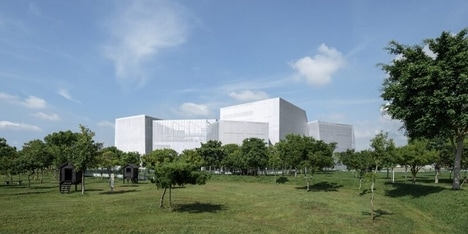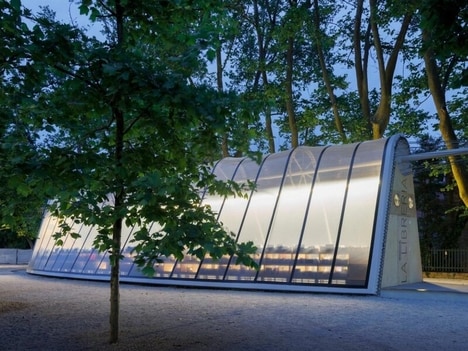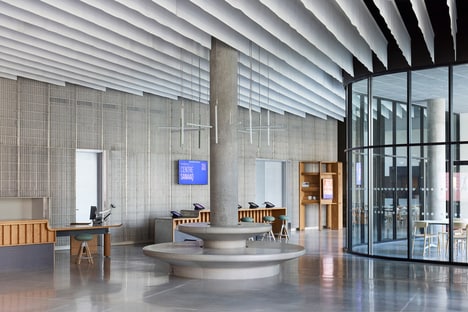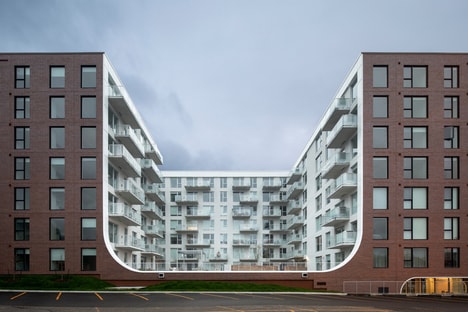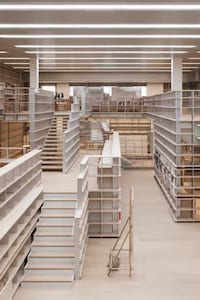
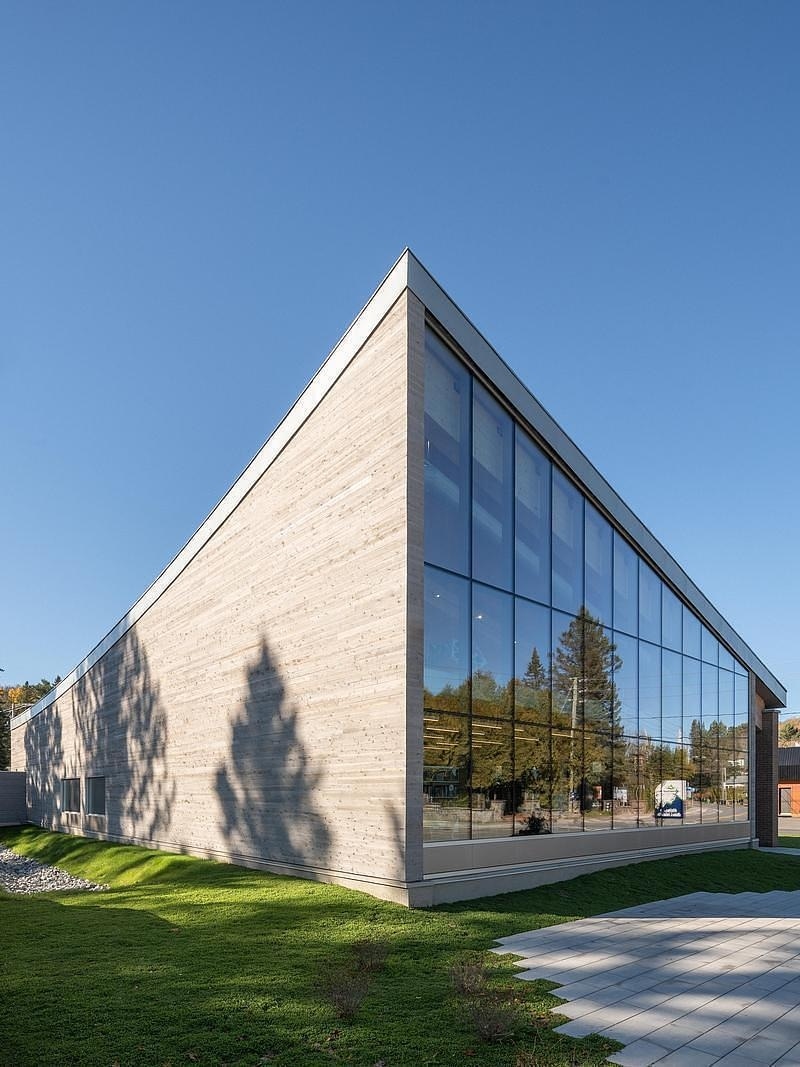
Perrault Architecture recently designed a community-focused library in Saint-Adolphe-d'Howard. The Monica C. Gratton Library is a living institution that serves as a place for social and intergenerational interaction.
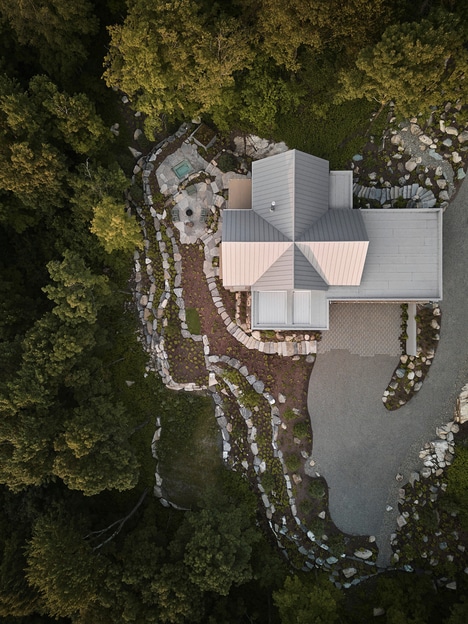
Perrault Architecture’s approach to this project includes a compact volume with a parabolic roof. The architectural design effectively combines a sloping profile characteristic of regional architecture with a curve echoing the sinuous lines of surrounding mountains and lakes. The building is supported by a solid wood structure covered with tin-plated copper installed in a traditional Canadian roofing pattern. These decisions respect local building heritage while providing durability and low maintenance. Perrault Architecture’s approach to the Monica C. Gratton Library project also sought to resolve flooding issues that the site has been known to struggle with.
Finally, the LEED Gold certification signals to environmentally conscious residents that their library was built with attention to energy efficiency, water conservation, and material selection.
Image Credit: Raphaël Thibodeau
What's Driving This Trend
- Community-centric Public Spaces
- A shift toward libraries as social and intergenerational hubs creates potential for platforms that blend programming, flexible spatial design, and localized services to reframe civic engagement.
- Resilient Flood-adapted Design
- Increasing site-specific flood mitigation strategies highlights opportunities for integrated building systems and modular foundations that maintain functionality during extreme weather events.
- Heritage-informed Sustainable Materials
- Respecting regional architectural language while achieving LEED standards points to novel material systems that combine traditional aesthetics with low-maintenance, high-performance composites.
Who This Affects Most
- Public Libraries and Cultural Institutions
- Evolving expectations for libraries as active community centers suggest new service models and facility upgrades that can transform user engagement and funding paradigms.
- Architecture and Urban Design
- Design practices that fuse regional form-making with climate resilience indicate opportunities for firms to develop repeatable design methodologies and technology stacks tailored to local contexts.
- Building Materials and Roofing
- Demand for durable, low-maintenance cladding like tin-plated copper combined with sustainability goals signals potential for advanced coatings and recyclable material supply chains.