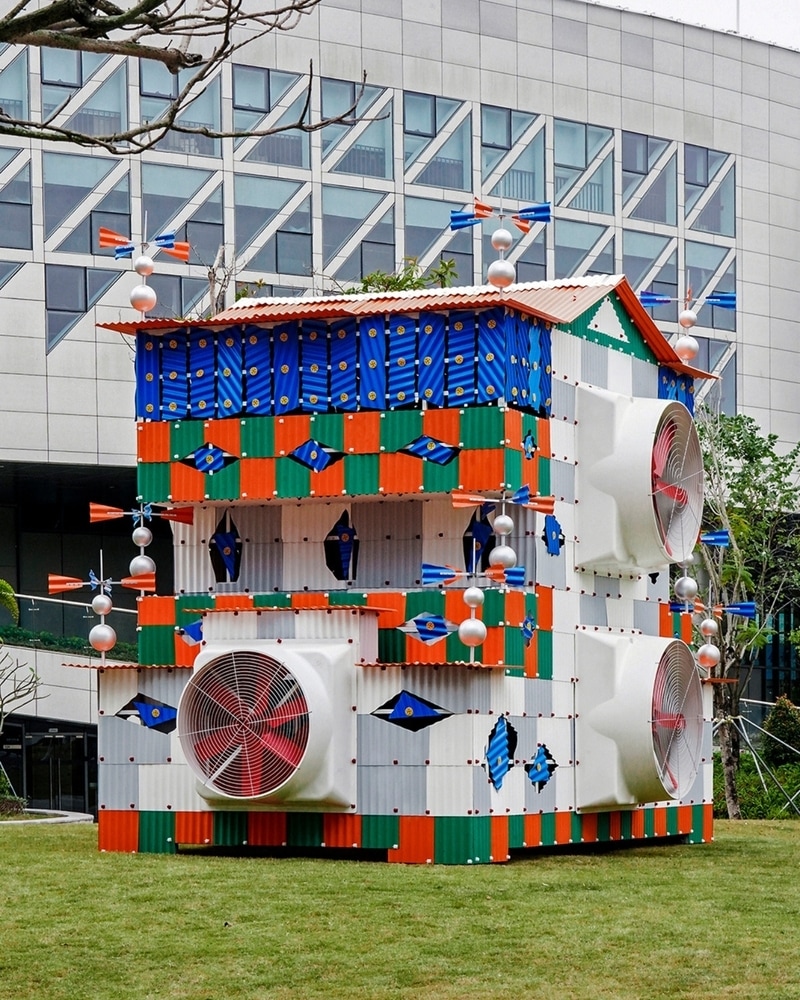
The Clock House No. 2 installation is a large-scale public art piece by Drawing Architecture Studio that transforms a familiar clock into a walkable architectural object. Created for the 7th Shenzhen Bay Public Art Season in China, the installation takes the everyday form of a mantel clock and scales it up to the size of a small house, using layered façades and tiled roofing inspired by local vernacular architecture. LED strips embedded in the structure’s surfaces glow through openings, marking time visually after dusk.
Every fifteen minutes the installation emits an automated musical chime, and the programmed illumination shifts in color to denote temporal progression. The design draws on historical references to traditional automaton clocks introduced to China during the late Ming and early Qing dynasties, reinterpreting theatrical timekeeping objects through contemporary materials and industrial components.
Image Credit: Drawing Architecture Studio
What Makes This Trend Stand Out
- Large-scale Functional Sculpture
- Monumental artworks that double as inhabitable or interactive infrastructure create new expectations for multiuse urban fixtures and experiential city assets.
- Temporal Light Programming
- Programmable illumination linked to timekeeping and rhythm introduces opportunities for architectures to communicate schedules, moods, and civic signals through dynamic color and intensity shifts.
- Vernacular-inspired Contemporary Design
- Contemporary projects that reinterpret local architectural motifs at exaggerated scales enable culturally resonant installations that blend tradition with industrial fabrication techniques.
Sectors Adopting This
- Public Art and Placemaking
- Commissioning large, time-based installations opens pathways for place identity strategies that merge artistic practice with municipal programming and community engagement metrics.
- Urban Lighting and Smart Infrastructure
- Networks of programmable LEDs integrated into urban fixtures present prospects for infrastructure that conveys information, enhances safety, and supports energy-aware, synchronized cityscapes.
- Cultural Tourism and Heritage Tech
- Experiential heritage displays that combine historical narratives with interactive mechanics can reshape visitor expectations around storytelling, interpretation, and monetizable cultural experiences.