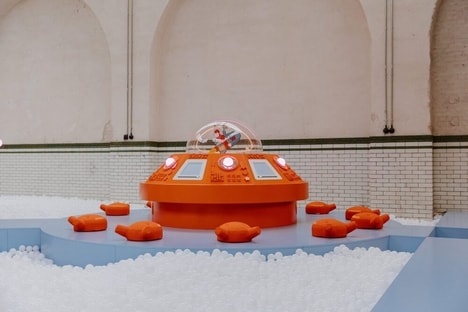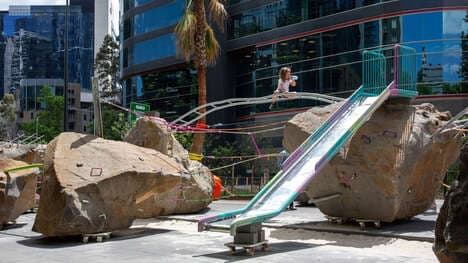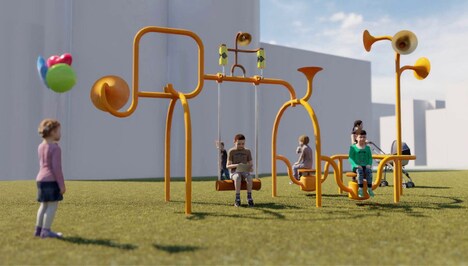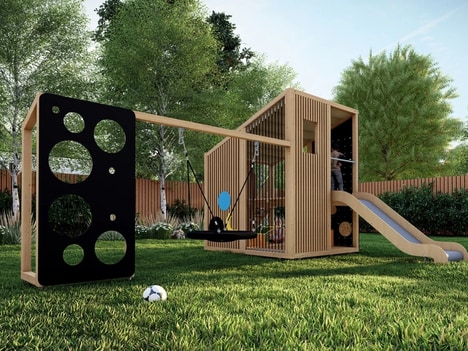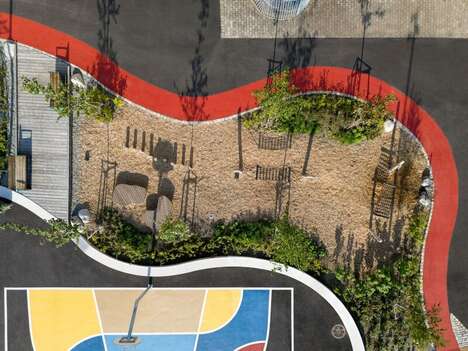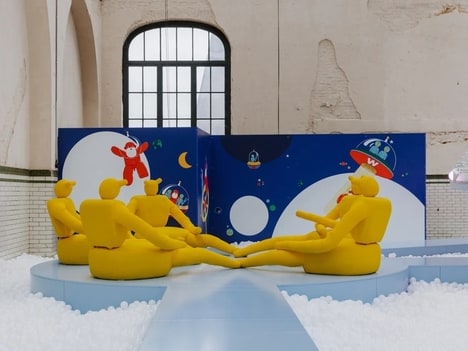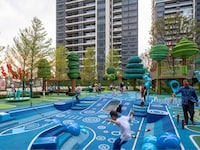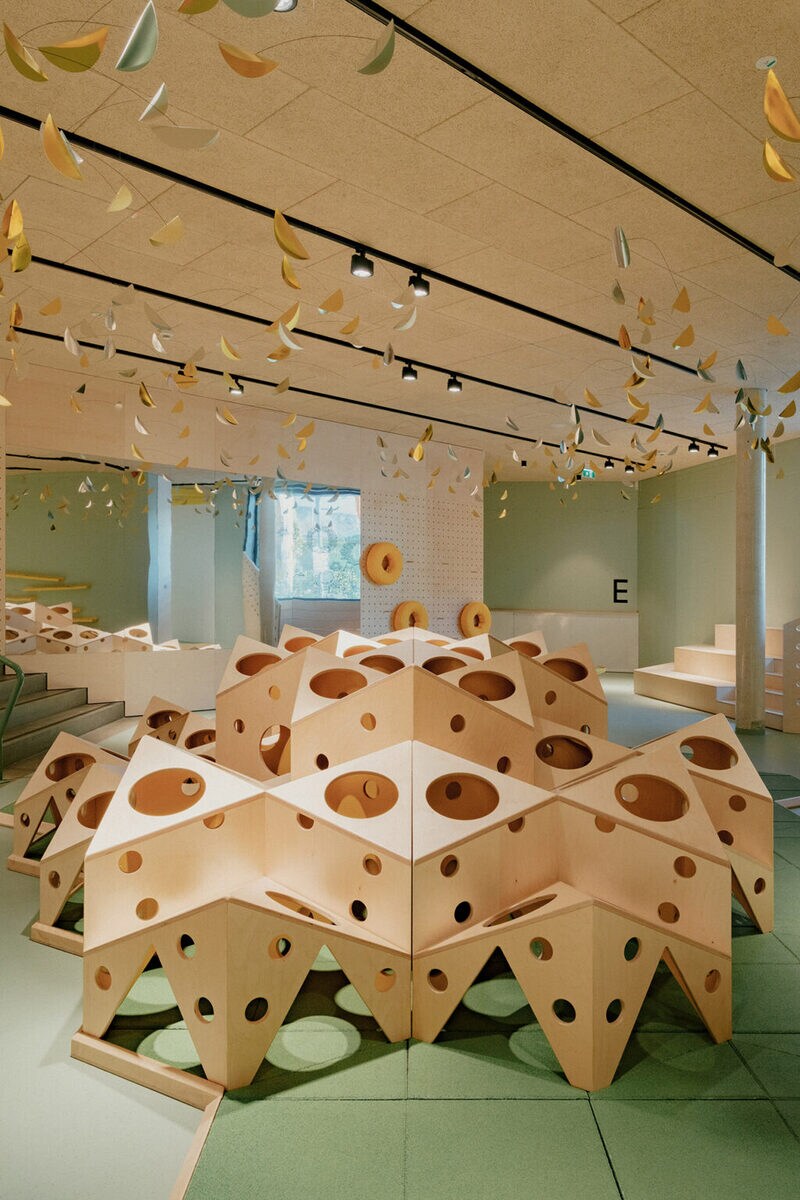
The Archipelago Playground is a uniquely thoughtful design by Jakub Szczęsny and Karolina Potębska with collaborations alongside Rainer Stadlbauer for Kinder Kunst Labor. The children's museum is a structural form made from wood and concrete materials in the root of Altoona Park in St. Polten, Austria.
The team of designers was working on creating an indoor playspace that would tap into various senses. It is catered towards a younger audience with the question which prompts: “How far could we go in making a space less devoid of potential risks?” The Archipelago is a great space to explore and develop essential skills in the process of playing. It encourages imaginative abilities and builds fine motor skills.
Image Credit: Jakub Szcz?sny, Karolina Pot?bska, Rainer Stadlbauer
What Makes This Trend Stand Out
- Sensory-integrated Playgrounds
- Playgrounds that utilize sensory-rich environments present opportunities for immersive and developmental play experiences that engage children on multiple levels.
- Risk-inclusive Play Spaces
- Developing playgrounds that incorporate manageable risks offers children a controlled environment to build resilience and learn risk assessment.
- Indoor Nature-inspired Play Areas
- Bringing elements of nature into indoor play settings could revolutionize the design of children's museums by combining natural aesthetics with urban play environments.
Sectors Adopting This
- Children's Museum Design
- Innovative playground concepts integrated into children's museums can redefine educational spaces as interactive experiences.
- Construction Materials
- The use of durable and sustainable materials like wood and concrete in innovative ways provides opportunities for advancements in the construction of child-safe structures.
- Educational Toys and Games
- Integrating play spaces that encourage skill development can influence the design and function of educational toys aimed at fine motor skill enhancement.