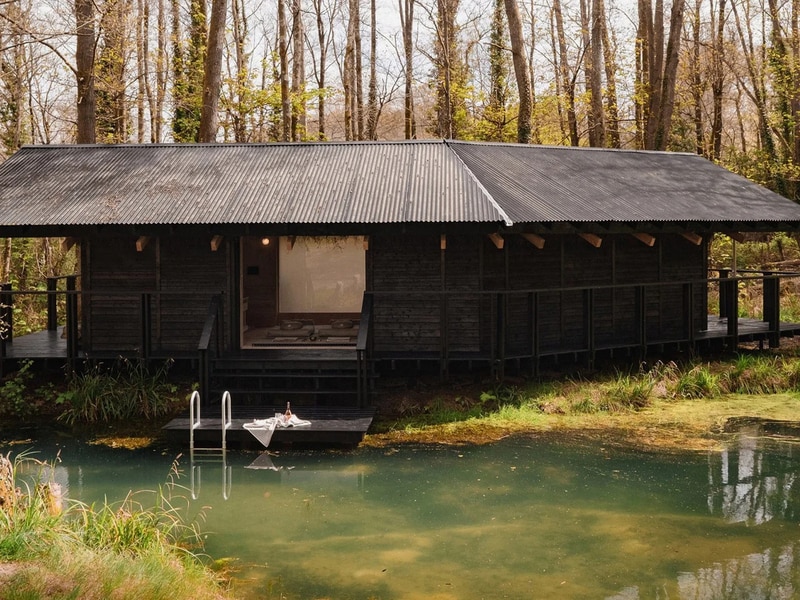
Yogi's Cabin is a 38-square-metre retreat designed by Built Works at Great Park Farm in East Sussex, England. Developed for the Architects Holiday hospitality brand, the building is organized around a dedicated yoga studio positioned at the center of a barn-like structure. The cabin sits beside a natural swimming pond and follows an east-west orientation. Large sliding openings frame views of the surrounding woodland and allow natural light to enter from both directions throughout the day. A continuous perimeter deck extends around the building and connects interior and exterior spaces.
The structure combines references from Japanese residential architecture and local agricultural buildings. Estate-grown larch cladding was charred on site using the traditional yakisugi technique to improve durability and weather resistance. Interior finishes include timber surfaces, sliding screens, and a limited material palette.
Image Credit: Built Works
What's Driving This Trend
- Nature-integrated Wellness Retreats
- Secluded hospitality spaces centered on yoga, water, and woodland views signal demand for restorative stays that merge wellness programming with immersive natural environments.
- Charred-timber Micro-cabins
- Traditional yakisugi cladding and locally sourced wood create durable, low-impact structures with potential to redefine premium small-scale accommodation through regional materials and craft-led construction.
- Indoor-outdoor Hospitality Design
- Sliding openings, perimeter decks, and daylight-oriented layouts reflect a shift toward flexible guest experiences where architecture dissolves boundaries between private interiors and surrounding landscapes.
Who This Affects Most
- Hospitality
- Boutique retreat operators are increasingly differentiated by purpose-built wellness cabins that combine design-led lodging, restorative amenities, and site-specific environmental experiences.
- Architecture
- Compact rural buildings inspired by agricultural forms and Japanese residential design reveal opportunities for hybrid typologies that balance cultural references, climate resilience, and minimal footprints.
- Wellness Tourism
- Yoga-focused destinations embedded in natural settings suggest a growing market for travel experiences where mindfulness, biophilic design, and low-density accommodation become core value drivers.