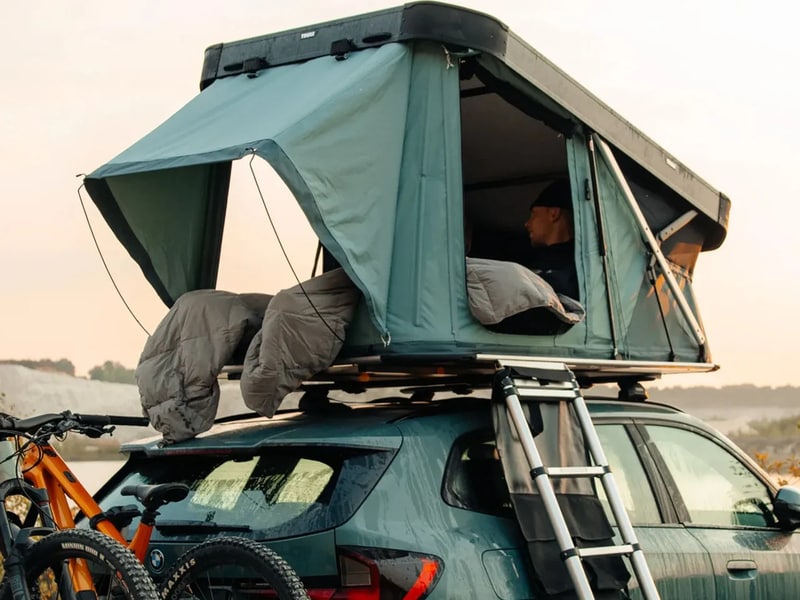
The Thule Widesky rooftop tent is a two-person hardshell system designed to create both a sleeping area and a raised living space on top of a vehicle. The product was developed by Thule’s in-house design and engineering team, using a lightweight aluminum shell that opens in seconds through a gas-assisted mechanism. The structure lifts into a wedge form, creating increased headroom at the front while maintaining a compact profile when closed.
The interior includes a quilted foam mattress that folds into a backrest, allowing the space to shift from a bed into a seated lounge. Large panoramic doors and mesh panels provide ventilation and outward views, while integrated dimmable LED lighting supports use after dark. A ladder can be mounted on any side, and internal storage elements keep gear organized within the enclosure.
Image Credit: Thule
What's Driving This Trend
- Vehicle-based Micro Living
- Growing consumer demand for compact, elevated living spaces on vehicles highlights potential for new mobile residential ecosystems that blend shelter, comfort, and connectivity.
- Rapid-deploy Hardshell Systems
- The use of gas-assisted, lightweight aluminum shells that open in seconds suggests opportunities for instant-deployment shelter solutions across outdoor and emergency contexts.
- Adaptive Interior Modularization
- Convertible interiors that shift between sleeping and lounging modes point toward multifunctional modules that optimize tiny-footprint comfort and storage.
Who This Affects Most
- Outdoor Recreation Equipment
- A shift toward integrated, vehicle-mounted living products indicates room for product lines that combine rugged durability with home-like amenities.
- Automotive Accessories and Roof Systems
- Demand for streamlined, load-bearing rooftop units signals potential for vehicle-integrated platforms and standardized mounting ecosystems.
- Hospitality and Mobile Accommodation
- Elevated, portable lodging concepts reveal new lodging formats that blur the lines between traditional campsites and boutique short-stay experiences.